Mexico Gripped by Coordinated Cartel Retaliation After El Mencho's Death
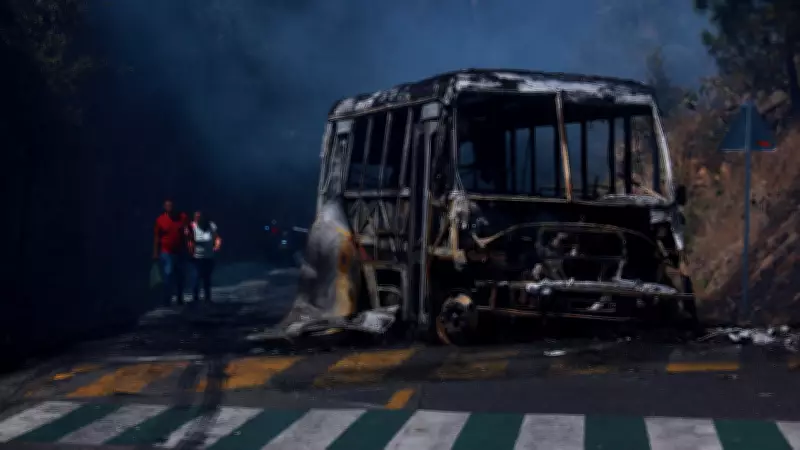
Within hours of the killing of Nemesio Oseguera, the feared cartel boss known as El Mencho, Mexico was plunged into a coordinated wave of retaliation that paralyzed highways, grounded flights, and sent residents scrambling for safety. Gunmen believed to be loyal to the slain leader of the Jalisco New Generation Cartel (CJNG) blocked major roads across several states with burning vehicles and torched businesses in what security sources described as an orchestrated show of force.
Widespread Disruption and Public Fear
In numerous towns, authorities urgently advised tourists and residents to remain indoors, while trucking groups instructed drivers to avoid key routes or return to their depots until conditions stabilized. The violence followed a high-profile operation by Mexican special forces in Tapalpa, Jalisco state, carried out with US intelligence support, according to officials. Oseguera, 60, died in custody after being injured during the raid, with his body transported to Mexico City in a heavily guarded convoy.
Air travel was severely disrupted as Air Canada, United Airlines, and Aeromexico canceled flights to Puerto Vallarta, the Pacific beach resort where stunned visitors filmed thick plumes of smoke rising over the bay. Video evidence showed beachgoers on a pier capturing images of dark clouds blotting out the ocean skyline, highlighting the immediate and visible impact of the cartel's response.

Cartel Member Warns of Escalating Violence
The violence, spanning more than half a dozen states, evoked scenes that have become grimly familiar over two decades of Mexico’s war against drug cartels—swift reprisals, paralyzed transport corridors, and cities on edge. A CJNG member told Reuters that the fires and sporadic gunfire were acts of revenge for Oseguera’s killing during Sunday’s military raid and warned that the unrest could escalate as factions maneuver to seize control of the cartel.
"The attacks were carried out in revenge for the leader’s death, at first against the government and out of discontent," the person said, speaking on condition of anonymity. "But later the internal killings are coming, by the groups moving in to take over." This statement underscores the potential for prolonged internal conflict within the cartel, adding to the instability.
State-by-State Impact and Security Responses
In Jalisco state, authorities reported that gunmen attacked a National Guard base and recommended hotel guests stay inside as public transport was suspended. Elsewhere, security sources shared videos showing:
- A military tank rolling through a residential neighborhood in Aguascalientes
- Roadblocks choking the busy Mexico-Puebla highway
- Armed men in pickup trucks halting traffic in Colima
The state of Guanajuato—long a CJNG stronghold—reported 55 separate incidents across 23 municipalities and 18 arrests, though officials said by evening the situation was under control. Residents described an atmosphere of fear and uncertainty, with Carlo Gutierrez from Guadalajara noting that WhatsApp groups buzzed with warnings to remain indoors. "There is fear and a lot of caution," he said of the city, one of Mexico’s host venues for this summer’s World Cup matches.
Historical Context and Political Implications
Authorities have reported no civilian deaths linked to the backlash, beyond cartel members and security personnel killed during the operation that brought down Oseguera. However, past high-profile arrests and killings of cartel leaders have triggered similar waves of violence, such as:

- The 2019 detention and swift release of Ovidio Guzman, son of Sinaloa Cartel boss Joaquin “El Chapo” Guzman, which led to gun battles in Culiacán
- His re-arrest in 2023 that again set off unrest
- The 2024 capture of Ismael “El Mayo” Zambada, which plunged the Sinaloa Cartel into a bloody internal struggle that continues
Reacting to the latest violence, US Deputy Secretary of State Christopher Landau said on social media: "It’s not surprising that the bad guys are responding with terror. But we must never lose our nerve." The turmoil presents an immediate challenge for President Claudia Sheinbaum, who has been under pressure from Washington to intensify operations against cartels blamed for trafficking fentanyl into the United States.
While Sheinbaum stressed that daily life was proceeding normally in most of the country, the scale of the backlash underscored the risks of taking down a figure whose organization has embedded itself across vast swathes of Mexico. In Washington, the Trump administration praised the killing as a major blow to organized crime, but on the ground in Mexico, the immediate aftermath was defined less by celebration than by roadblocks, flames, and the specter of further bloodshed, highlighting the complex and dangerous dynamics of cartel warfare.