From 1933 to 1945, the world experienced some of its darkest years, leaving an indelible scar on history. Adolf Hitler's rise as chancellor of Germany ushered in the Third Reich, a period marked by unprecedented atrocities. During the Nazi regime, approximately 6 million Poles perished, including 3 million Jews.
The Invasion and Refugee Crisis
The German invasion of Poland on September 1, 1939, triggered a massive refugee crisis. Many Poles fled to the Soviet Union, where they were initially detained. However, after the Nazi invasion of the Soviet Union in June 1941, they were released. Among them were 18,000 children whose fate hung in the balance.
Polish humanitarian organizations mobilized to rescue these children, sending caravans eastward through Iran to India. It was at this critical juncture that an Indian maharaja emerged as a beacon of hope.

Jam Sahib: The Father of Polish-Jewish Children
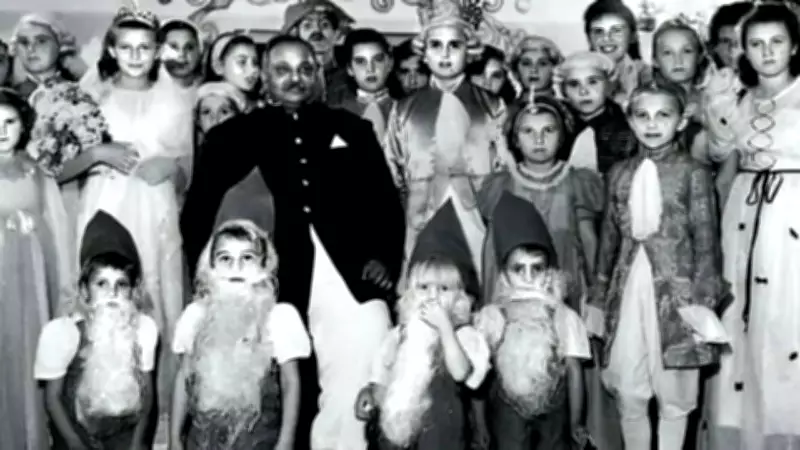
In the princely state of Nawanagar (now Jamnagar), the rulers were known as Jam Sahib. Maharaja Digvijaysinhji Ranjitsinhji Jadeja reigned from April 1933 to February 1948. He succeeded his uncle, the famous cricketer Ranjitsinhji, but earned renown for an even greater legacy. In 1942, amid the raging World War II and Nazi persecution of Jews, Maharaja Digvijaysinhji stepped forward to provide refuge to about 1,000 Polish children.
After a harrowing journey through Soviet territories and the Middle East, the children arrived on Indian shores, where the Maharaja welcomed them. He established a special settlement at Balachadi, near Jamnagar, offering food, education, shelter, and medical care.
More importantly, he gave them a sense of dignity and belonging. According to survivor accounts, the Maharaja told the children: "You are no longer orphans. You are now Nawanagaris." He absorbed them into his kingdom as his subjects, asking them to call him 'Bapu' (father). He taught them Polish language, culture, and patriotism, becoming their protector and guide.
The children stayed at Balachadi until the war ended in 1945, after which they dispersed to Poland, the United Kingdom, Australia, and other countries.
Honoring the Good Maharaja
Fifty years after his death, Poland's Parliament honored Maharaja Digvijaysinhji for his aid to Polish children and refugees during World War II. A square named "Good Maharaja's Square" was created in Warsaw, along with a memorial and a street bearing his name.
In Israel, the Jam Sahib Sculpture was erected in Nevatim by the Jewish American Society for Historic Preservation. During a visit to Israel in February 2026, the Maharaja's story was highlighted as a testament to India's humanitarian ties with Jewish people, transcending formal diplomatic relations. From Jamnagar to Jerusalem, humanity crossed borders and touched hearts, exemplifying timeless compassion.