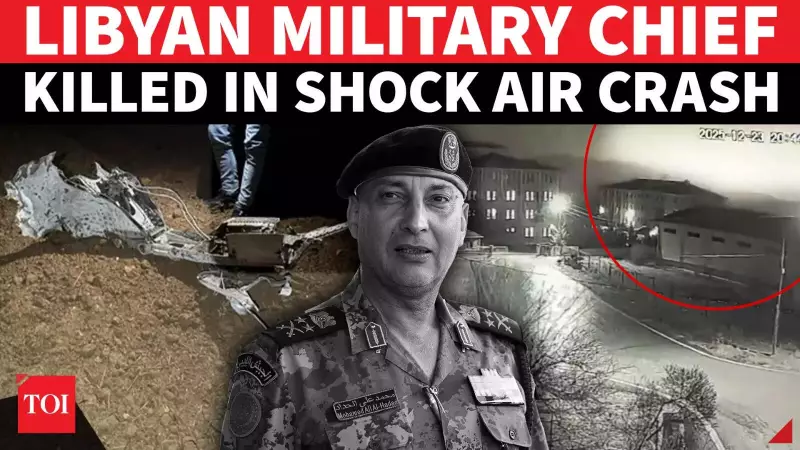
A tragic aviation disaster has claimed the life of Libya's top military commander. A private jet carrying General Muhammad Ali Ahmad al-Haddad, the chief of the Libyan Army, crashed shortly after takeoff from Turkey's capital, Ankara, on Tuesday. The accident resulted in the deaths of everyone on board.
CCTV Footage Captures The Tragic Final Moments
Security cameras captured the horrifying moment the aircraft lost control and went down. The crash site was near the village of Kesikkavak, located in the Haymana district. This area is approximately 70 kilometers, or about 43.5 miles, south of Ankara. The visual evidence provides a stark record of the sudden catastrophe.
Fatalities and Investigation
The flight was not carrying the General alone. The crash claimed the lives of four other Libyan officers and three crew members, bringing the total number of fatalities to eight. The incident has sent shockwaves through diplomatic and military circles. Turkish authorities have launched a full-scale investigation to determine the precise cause of the crash. Initial reports focus on a possible loss of control after departure, but official findings are awaited.

The death of General al-Haddad is a significant blow to Libya's military structure. As the Army Chief, he was a key figure in the nation's complex political and security landscape. The loss of four other senior officers further compounds the tragedy for the Libyan armed forces.
Regional and International Repercussions
This incident underscores the ongoing volatility in Libyan politics and its international connections. The fact that the flight originated from Ankara highlights the diplomatic engagements between Libyan factions and regional powers. The crash is likely to have immediate consequences for military coordination and political stability within Libya.
Aviation safety experts will scrutinize the CCTV footage and debris to understand the sequence of events. Questions regarding the aircraft's maintenance, weather conditions at the time of departure, and pilot communications will be central to the probe. The global community, particularly nations involved in Libyan affairs, will be monitoring the investigation's outcomes closely.