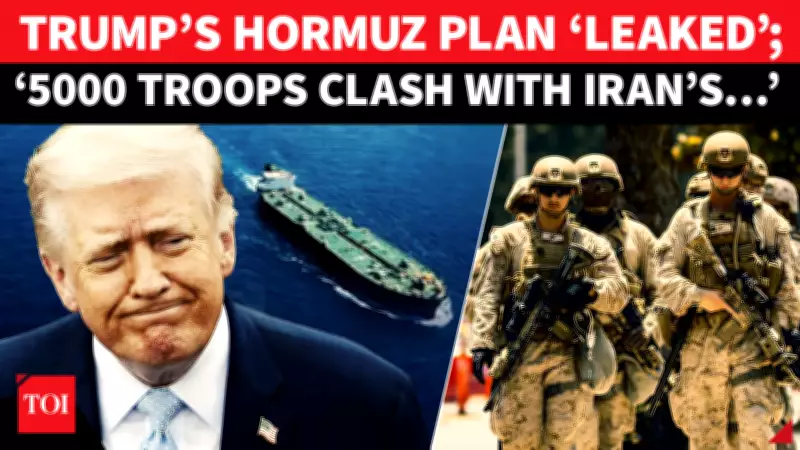
Leaked Report Unveils Covert US Strategy for Strait of Hormuz
A leaked intelligence report has exposed a secretive military plan by the United States to assert control over the strategically crucial Strait of Hormuz, coinciding with a dramatic 48-hour ultimatum issued by former President Donald Trump to Iran. This revelation has sparked intense geopolitical scrutiny and raised questions about Washington's true intentions in the volatile region.
Massive Military Deployment and Targeted Infrastructure
According to the leaked documents, the United States has deployed nearly 5,000 troops to the Middle East, including specialized Marine units, advanced fighter jets, and state-of-the-art amphibious assault forces. This significant military buildup is reportedly part of a broader strategy aimed at crippling Iran's critical oil export capabilities. The plan specifically targets key infrastructure such as Kharg Island, which handles the majority of Tehran's petroleum shipments, potentially disrupting global energy markets.
Trump's Ultimatum and Diplomatic Isolation
The leaked report emerges against the backdrop of Trump's high-stakes ultimatum to Iran over control of the Strait of Hormuz, a vital maritime chokepoint for global oil transit. Initially, the Trump administration sought to form an international naval coalition to counter Iranian influence in the waterway. However, key allies reportedly declined to participate, leaving Washington to pursue unilateral military action. This diplomatic setback has fueled speculation that the ultimatum may have served as a smokescreen for the covert operations now coming to light.

The exposure of this secret plan is likely to escalate already heightened tensions between the United States and Iran, with potential ripple effects across the Middle East. Analysts warn that any military confrontation in the Strait of Hormuz could trigger a severe disruption in global oil supplies, leading to economic instability and heightened conflict risks. The situation underscores the fragile balance of power in a region where strategic waterways are often flashpoints for international disputes.
Broader Context and Future ScenariosThis development adds a new layer of complexity to the ongoing US-Iran rivalry, which has seen periodic flare-ups over nuclear ambitions, regional proxy wars, and maritime security. The leaked plan suggests a more aggressive posture by Washington, potentially signaling a shift toward direct military engagement rather than diplomatic negotiations. As details continue to emerge, global observers are closely monitoring how Iran might respond, with possibilities ranging from retaliatory strikes to intensified cyber warfare and asymmetric tactics.
The revelation of the secret Hormuz plan not only challenges public narratives but also highlights the opaque nature of military strategizing in high-stakes international crises. It remains to be seen how this disclosure will influence future policy decisions and regional stability in the coming months.