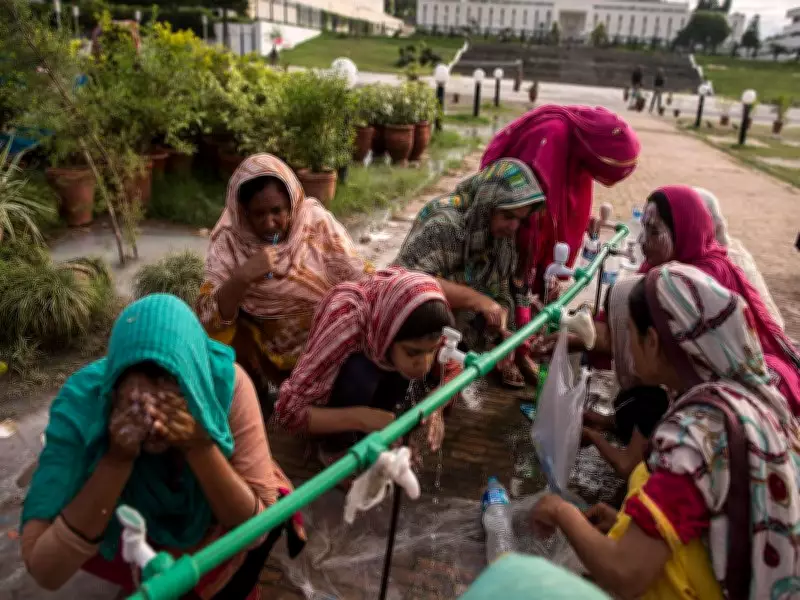
Karachi's already fragile water supply faced another severe disruption on Monday, marking the third consecutive day of power outages that have crippled the city's water distribution system. The ongoing crisis, compounded by scorching weather, has intensified the suffering of millions of residents in Pakistan's largest city, according to a report by Dawn.
Hub Pumping Station Failure
The latest disruption occurred after the supply from the Hub Pumping Station was suspended due to a fault in K-Electric's (KE) main cable. The Karachi Water and Sewerage Corporation (KWSC) reported that this power suspension resulted in a daily water shortfall of 85 million gallons per day (MGD) for the city. However, K-Electric claimed that power supply was restored via alternative means, though the KWSC maintains that the cable fault at the Hub Pumping Station continues to cause significant deficits.
Previous Disruptions and Cumulative Shortfall
This development follows a series of failures that have plagued the city's water infrastructure. On May 30, supply was disrupted in several parts of Karachi after K-Electric carried out a forced shutdown at the Dhabeji Grid to urgently repair a major technical fault in Power Transformer No. 1. That shutdown knocked out 10 of the 21 pumping units at the Dhabeji Pumping Station, suspending water supply to numerous areas. The crisis escalated further in the early hours of Saturday, when an outage halted operations at the K-II Pumping Station, disrupting supply in several parts of the city and causing an immediate shortfall of 54 MGD. Although power was restored after a day-long disruption, the city had already faced a cumulative shortfall of 122 MGD.

Systemic Governance Collapse
The recurring water crisis mirrors a systemic governance collapse and crumbling infrastructure in Pakistan. Karachi has been plunged into a massive civic crisis, with the water shortage now entering its second consecutive month. The severe shortage has left thousands of desperate families entirely dependent on expensive water tankers and unregulated private suppliers, as the government fails to provide basic necessities. For ordinary residents in the cash-strapped nation, securing a single bucket of water has become an exhausting daily battle. Long, agonising queues for tankers, dry domestic taps, and extortionate water costs have compounded the miseries of households already crushed under Pakistan's skyrocketing inflation and economic misery.
Broader Infrastructure Failures
According to Dawn, the enduring crisis, which originally began in late March, has persisted unabated due to a lethal combination of state neglect. Major pipeline leaks, repeated bursts in old transmission lines, chronic power outages at vital pumping stations, and recurrent technical faults have left the city's water supply system entirely dysfunctional. Normal water distribution remains non-existent across numerous sectors for weeks, highlighting the depth of the infrastructure crisis.
The situation underscores the urgent need for comprehensive reforms and investment in Pakistan's water and power infrastructure to prevent such recurring disasters and alleviate the suffering of millions.