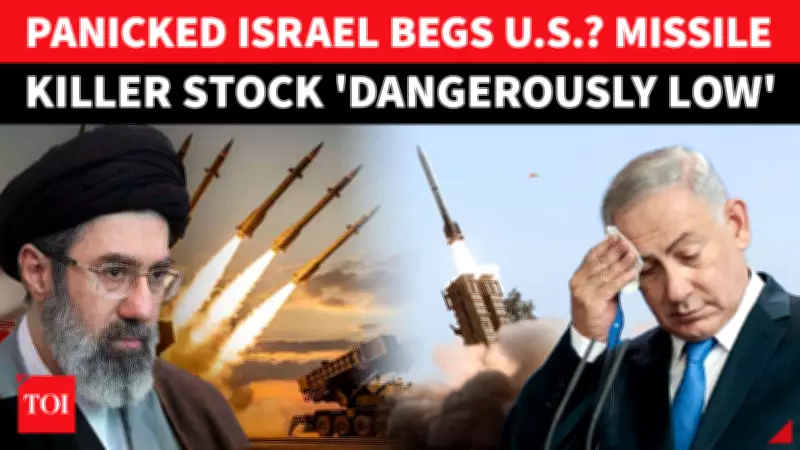
Israel's Missile Defense Crisis: Urgent US Request for Interceptors Amid Iran's New Tactics
Israel has formally informed the United States this week that its stockpile of ballistic missile interceptors is running dangerously low, as relentless attacks from Iran continue to overwhelm its defense systems. This critical situation was reported by Semafor, citing unnamed US officials as sources, highlighting a significant escalation in regional tensions.
Iran's Enhanced Missile Strategy Overwhelms Israeli Defenses
The crisis has intensified following Iran's decision to incorporate a specific, highly effective munition into its already formidable missile arsenal. This new tactical enhancement has dramatically accelerated the depletion of Israel's interceptor reserves, forcing the Israeli Defense Forces (IDF) into a precarious defensive posture. The continuous barrage of attacks has stretched Israel's missile defense capabilities to their absolute limits, creating an urgent need for immediate reinforcement.
According to the report, the situation represents a severe and ongoing challenge for Israeli military planners, who are now scrambling to secure additional defensive resources. The unnamed US officials emphasized that the depletion rate of interceptors has reached critical levels, necessitating swift action to prevent potential vulnerabilities in Israel's air defense network.

Strategic Implications and Regional Security Concerns
This development underscores the escalating nature of the conflict between Israel and Iran, with ballistic missile warfare becoming a central component of the hostilities. The urgent request for interceptors from the United States signals a deepening reliance on American military support in the face of Iran's aggressive and technologically advancing missile programs.
The strategic implications are profound, as the effectiveness of Israel's missile defense systems is crucial for national security and regional stability. The ability to intercept incoming threats is a cornerstone of Israel's defense doctrine, and any shortfall in interceptor stocks could have serious consequences for civilian and military infrastructure.
Furthermore, this crisis highlights the broader geopolitical tensions in the Middle East, where missile technology and defense capabilities are key factors in the balance of power. The ongoing exchanges between Israel and Iran, along with their respective allies, continue to shape the security landscape of the region.
Context and Background of the Conflict
The reported interceptor shortage comes amid a series of heightened military engagements and provocative statements from both sides. Recent developments include:
- Iran's declaration of the Persian Gulf as off-limits to American ships, escalating tensions in the strategic Hormuz Strait.
- Hezbollah's threatening rhetoric against Israel, following IDF actions in southern Lebanon.
- Continued attacks on US bases in the region by Iranian-backed forces using advanced drone technology.
- International concerns over the potential for broader conflict, as evidenced by incidents like the explosion at a Jewish school in Amsterdam.
These events collectively contribute to a volatile environment where missile defense capabilities are more critical than ever. The urgent request for interceptors is a direct response to this escalating threat environment, reflecting Israel's proactive measures to safeguard its territory and population.
In conclusion, the revelation of Israel's critically low interceptor stocks and its subsequent appeal to the United States marks a significant moment in the ongoing conflict with Iran. As Iran continues to refine its missile tactics, the pressure on Israel's defenses is likely to persist, underscoring the need for sustained international support and strategic preparedness in the face of evolving threats.