

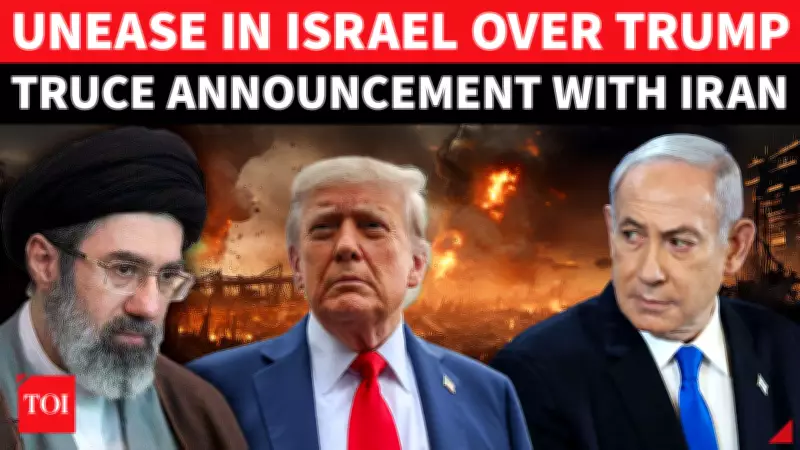
Israel's Stark Admission: Military Objectives in Iran Remain Unfulfilled Amid Ceasefire Concerns
In a significant development that has sent shockwaves through diplomatic circles, Israel has made a startling confession regarding its military campaign against Iran. Senior officials have acknowledged that the nation failed to achieve all its strategic objectives in the ongoing conflict, even as tensions continue to simmer across the volatile Middle East region.
Netanyahu's Discontent with US-Brokered Truce Agreement
Israeli Prime Minister Benjamin Netanyahu has reportedly expressed significant dissatisfaction with the ceasefire arrangement negotiated by former US President Donald Trump. While Israel has reluctantly agreed to pause hostilities under American pressure, the timing and terms of the truce remain ambiguous, creating what analysts describe as a dangerously fragile peace.
The ceasefire, intended to de-escalate one of the most serious confrontations between Israel and Iran in recent years, now faces its most critical test. With missile and drone strikes continuing to disrupt the region, the agreement's viability hangs in the balance, potentially determining whether the Middle East moves toward lasting peace or descends into deeper conflict.

Ongoing Regional Violence Despite Ceasefire Announcement
Despite the announced pause in hostilities, military engagements have persisted across multiple fronts:
- Iran has launched coordinated attacks targeting both Israeli territory and Gulf nations
- Multiple interceptions reported in Qatar, the United Arab Emirates, and Saudi Arabia
- Explosions and air raid sirens have been documented across numerous locations
- Civilian infrastructure damage continues to mount despite diplomatic efforts
The continued violence underscores the complex challenges facing regional stability, with both state and non-state actors testing the boundaries of the fragile ceasefire arrangement.
Strategic Implications and Regional Power Dynamics
Israel's admission of incomplete military objectives represents a significant strategic development with far-reaching implications:
- Credibility concerns for Israeli military capabilities and intelligence assessments
- Strengthened Iranian positioning in regional power calculations
- Questions about US diplomatic effectiveness in mediating Middle East conflicts
- Potential recalibration of security alliances throughout the Gulf region
The situation remains fluid, with military commanders on all sides maintaining high alert status despite the nominal ceasefire. The coming days will prove crucial in determining whether diplomatic channels can prevail over military escalation, or whether the region faces renewed and potentially more devastating conflict.






