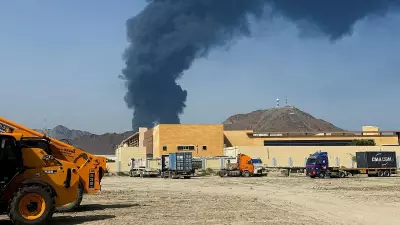
The Israeli military has confirmed carrying out a targeted airstrike in southern Lebanon, resulting in the death of a significant operative from Iran's elite Quds Force. The incident marks a serious escalation in the ongoing cross-border hostilities between Israel and the Iran-backed Hezbollah group.
Details of the Targeted Strike
According to a statement released by the Israel Defence Forces (IDF), the strike was conducted on Monday. The target was identified as Ali Abed Akhsan Naim, who served as the deputy commander of the Hezbollah unit responsible for rockets and missiles in the Jouaiyya region of southern Lebanon.
The IDF described Naim as a central figure within Hezbollah's rocket and missile operations. Crucially, they stated he was not only a Hezbollah member but also "a member of Iran's Quds Force". The Quds Force is the external operations arm of Iran's Islamic Revolutionary Guard Corps (IRGC), responsible for overseas missions and supporting proxy groups across the Middle East.

The military asserted that Naim was actively involved in planning and executing attacks against Israeli civilians. He was reportedly behind the recent launches of rockets and missiles from southwestern Lebanon towards Israeli territory.
Escalating Tensions on the Northern Front
This targeted killing occurs amidst a period of sustained and intensifying violence along the Israel-Lebanon border. The conflict has been raging almost daily since the war between Israel and Hamas began in Gaza on October 7th of last year.
Hezbollah, a powerful Shiite militant group and political party in Lebanon, has positioned itself as a staunch ally of Hamas. It has opened a "support front" in the north to divert Israeli military resources and pressure the Israeli government. In response, the IDF has conducted numerous strikes against Hezbollah infrastructure and operatives in southern Lebanon.
The latest strike is particularly significant due to the victim's direct affiliation with Iran's Quds Force. It underscores the deep Iranian involvement in supporting and directing Hezbollah's military activities against Israel. Tehran provides Hezbollah with funding, advanced weapons, training, and strategic guidance.
Regional Repercussions and Future Implications
The elimination of a dual-hatted Hezbollah and Quds Force commander raises the stakes considerably. It represents a direct Israeli attack on an Iranian military asset operating in a neighboring country. Analysts warn that such actions increase the risk of a broader regional conflict, potentially drawing Iran into a more direct confrontation.
Hezbollah has vowed retaliation for the killing, which could lead to a new cycle of escalation. The group possesses a vast arsenal of rockets and precision-guided missiles capable of striking deep into Israel. Israel has repeatedly warned that it will not tolerate Hezbollah's military buildup near its border and is prepared for a large-scale operation if necessary.
The situation creates a precarious challenge for Lebanese authorities, who have limited control over Hezbollah's armed actions. The ongoing exchanges have already resulted in civilian displacements on both sides of the border and raised fears of a full-scale war that Lebanon, already in a severe economic crisis, can ill afford.
In summary, the Israeli strike that killed Ali Abed Akhsan Naim is more than another casualty in the border skirmishes. It is a pointed message to both Hezbollah and its patron in Tehran, demonstrating Israel's intelligence capabilities and its willingness to target high-value Iranian-linked operatives directly. The event significantly heightens tensions and brings the region closer to a potential miscalculation that could ignite a wider war.