

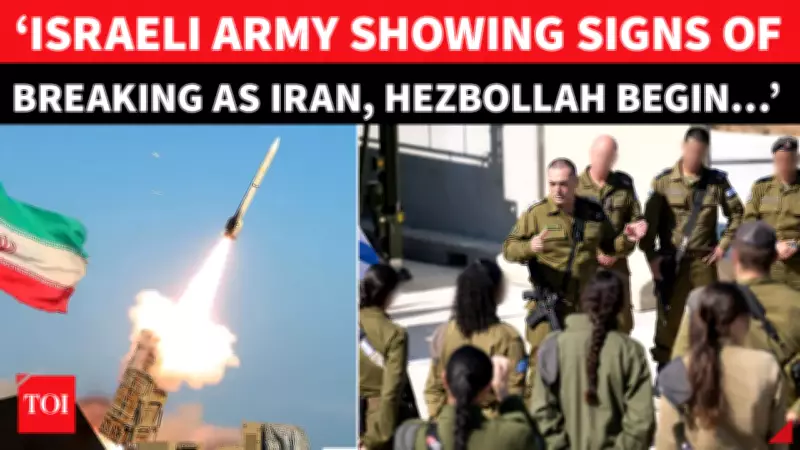
Israeli Military Leadership Sounds Alarm Over Multi-Front Conflict
Israel's defense establishment is facing unprecedented strain as the nation confronts a complex multi-front war scenario involving Iran and Hezbollah. The situation has escalated to the point where senior military officials are expressing grave concerns about the sustainability of current operations.
Explosive Warning from IDF Chief Eyal Zamir
In a development that has sent shockwaves through Israeli security circles, IDF Chief Eyal Zamir has issued what observers are describing as an explosive warning about the military's capacity to withstand current pressures. The warning comes amid mounting attacks from Iranian-backed forces that have stretched Israel's defense resources to their limits.
The timing of this revelation is particularly significant, occurring on March 27, 2026, when the military leadership felt compelled to voice these concerns publicly. This unprecedented move suggests the severity of the situation facing Israel's armed forces.

Political Backlash and Security Disaster Accusations
Opposition leader Yair Lapid has amplified these concerns, characterizing the current military situation as nothing short of a "security disaster." Lapid has placed direct responsibility on Prime Minister Benjamin Netanyahu's government, accusing the administration of pushing the Israeli Defense Forces into conflict without adequate preparation.
According to critics, the government has committed the military to extensive operations without ensuring sufficient soldier numbers, coherent strategic planning, or necessary resource allocation. This criticism comes at a time when Israel faces simultaneous threats on multiple fronts, creating what military analysts describe as the most challenging security environment in decades.
Deepening Manpower Crisis and Exhausted Forces
The Israeli military is grappling with several critical challenges that threaten its operational effectiveness:
- Reservist Exhaustion: Extended deployments have left reservist forces physically and mentally drained, raising questions about their continued combat effectiveness.
- Personnel Shortages: A deepening manpower crisis has left key positions understaffed, compromising the military's ability to respond to multiple simultaneous threats.
- Conscription Controversy: Political debates over ultra-Orthodox military service exemptions have further complicated recruitment efforts, creating additional strain on available forces.
- Resource Allocation: Questions persist about whether current military budgets and equipment allocations match the scale of threats facing the nation.
Strategic Implications and Regional Tensions
The warning from military leadership comes amid heightened regional tensions, with Iranian forces and Hezbollah militants presenting coordinated challenges to Israeli security. The multi-front nature of current conflicts represents a significant departure from previous security scenarios, requiring more complex strategic responses than Israel has needed in recent years.
Military analysts note that the traditional advantages Israel has enjoyed in regional conflicts—including technological superiority and intelligence capabilities—are being tested by adversaries who have developed sophisticated asymmetric warfare tactics and improved coordination between different militant groups.
The public nature of these warnings suggests that military leadership believes the situation requires urgent attention from both government officials and the general public. As Israel faces what may be its most significant security challenge in a generation, questions about military readiness, political leadership, and strategic planning have moved to the forefront of national discourse.
This development marks a critical moment in Israel's security history, with military leaders breaking from traditional protocol to voice concerns that could have far-reaching implications for the nation's defense posture and regional stability.






