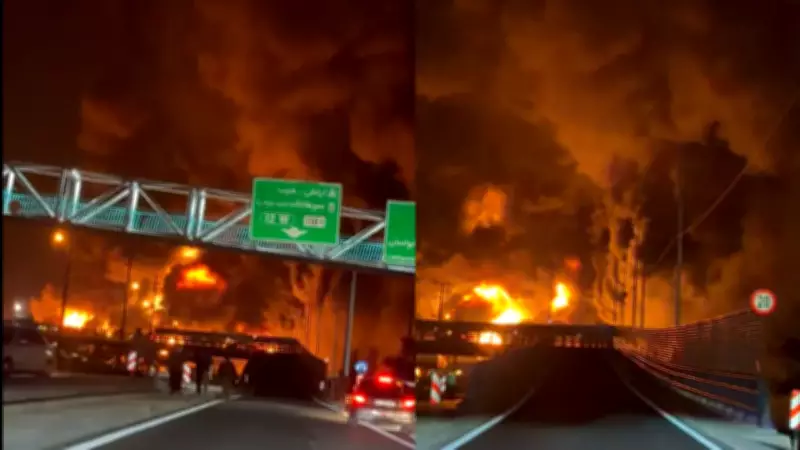
Israeli Airstrikes Target Iranian Fuel Storage, Triggering Massive Blazes in Tehran and Karaj
Explosions and extensive fires erupted across Tehran and the neighboring city of Karaj following Israeli airstrikes that struck several fuel storage facilities in the Iranian capital and surrounding regions. Videos circulating on social media depicted large flames and thick columns of smoke ascending into the night sky, with reports indicating multiple oil storage depots in Tehran and Alborz provinces were hit. One depot in Karaj, located west of Tehran, was also targeted, according to Iranian state media.
Apocalyptic Scenes and Strategic Targets
Among the widely shared footage, scenes reminiscent of a movie showed a massive apocalyptic inferno illuminating adjacent areas. The strikes reportedly focused on key infrastructure, including the Shahran oil depot in northwestern Tehran and sites near the Shahr Rey district, home to the capital's main refinery. Notably, the Shahran depot had previously been attacked by Israel in June of last year, highlighting a pattern of targeted assaults on Iran's energy assets.
Iran's oil ministry confirmed that emergency teams were actively working to contain the fires, while emphasizing that the nation's fuel reserves remained secure. Authorities stated that precautionary measures had been implemented in advance to prevent shortages. According to a source cited by the Times of Israel, three depots in western Tehran—specifically in the Kuhak and Shahran areas—along with a facility in Karaj were struck by Israeli fighter jets.

Military Justifications and Retaliatory Actions
The Israeli military officially confirmed the strikes, asserting that the fuel storage complexes were utilized by Iran's armed forces. The Israel Defense Forces (IDF) characterized the operation as a significant strike aimed at infrastructure supporting Iran's military operations. In a statement, the IDF elaborated, The military forces of the Iranian terror regime make direct and frequent use of these fuel tanks to operate military infrastructure. Through them, the Iranian terror regime distributes fuel to various consumers, including military entities in Iran. They added that the strike represented an additional step in intensifying damage to Iran's military framework.
In response, Iran's Revolutionary Guards announced they had launched a new wave of attacks against Israel as retaliation for the airstrikes. Beyond the fuel depots, the Israeli military disclosed that it had targeted what it described as Iran's two most central ballistic missile sites, further escalating the conflict.
Casualties and Environmental Impact
Iranian officials reported that at least five oil-related facilities in and around Tehran were impacted, including four storage depots and a petroleum products transport center. Although fires were eventually brought under control, fuel distribution experienced temporary interruptions as authorities assessed the extent of the damage. The CEO of Iran's National Iranian Oil Products Distribution Company confirmed that four individuals, including two tanker drivers, lost their lives in the strikes.
Residents in Tehran reported lingering smoke from the burning facilities into Sunday morning, accompanied by the smell of fuel in the air. CNN highlighted that blackened rainwater fell over parts of the city, believed to be a mixture of rain with soot and oil residue from the fires, underscoring the environmental repercussions of the attacks.
This incident marks a significant escalation in the ongoing tensions between Israel and Iran, with both sides engaging in military actions and retaliatory measures that threaten to further destabilize the region.