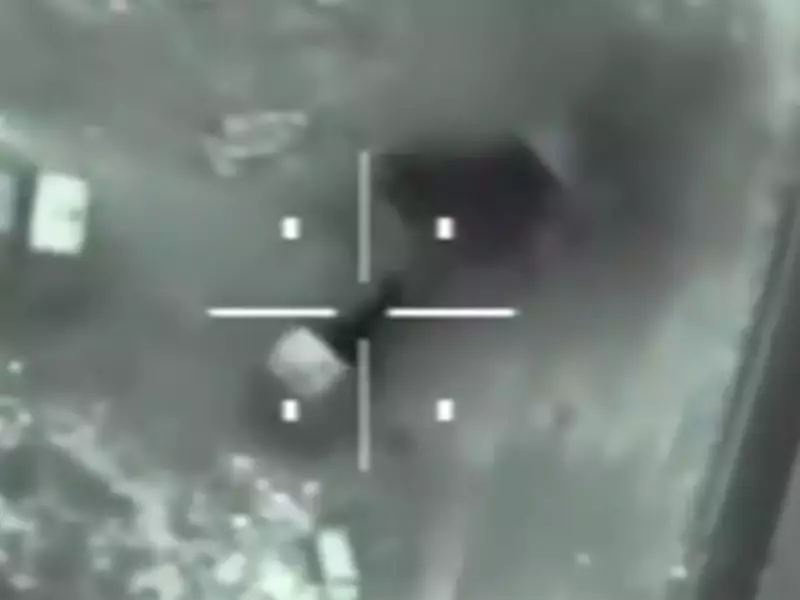
Israeli Air Force Claims Strike in Beirut Kills Hezbollah Operative
The Israeli Air Force (IAF) has asserted that it conducted a targeted strike in Beirut, Lebanon, resulting in the death of a member of the militant group Hezbollah's aerial unit. The operation, which took place on Thursday, March 13, 2026, targeted Marthsa Hussein Sarour, whom Israel labels as a terrorist, near the Lebanese University in Beirut.
Details of the Strike and Target
In a statement released on social media platform X, the IAF detailed that the strike was executed under the guidance of Military Intelligence. According to the Israeli military, Sarour was a key figure in Hezbollah's aerial unit, specializing in weapons production and serving as a leading expert in this field. The IAF further claimed that Sarour was the brother of Muhammad Hussein Sarour, who was previously killed during an Israeli military campaign known as Operation "Arrows from the North" and was described as the commander of Hezbollah's aerial unit.
Allegations of Academic Involvement
The Israeli statement also made allegations regarding Sarour's dual roles. Beyond his activities with Hezbollah, Sarour was employed as a chemistry lecturer at the Lebanese University in Beirut. The IAF accused Hezbollah of embedding operatives within academic institutions across Lebanon, suggesting that many serve as technical specialists involved in weapons production while holding teaching positions.

Broader Accusations Against Hezbollah
Additionally, the IAF claimed that Hezbollah operates weapons production infrastructure at multiple sites throughout Lebanon to enhance the group's self-sufficiency in armaments. The statement accused Hezbollah of systematically utilizing civilian areas across Lebanon to conduct militant activities, embedding its operatives and commanders within these spaces to carry out terrorist operations.
The IAF emphasized that such actions are part of Hezbollah's strategy to increase its operational capabilities while operating within civilian environments, raising concerns about the group's tactics and the implications for regional security.