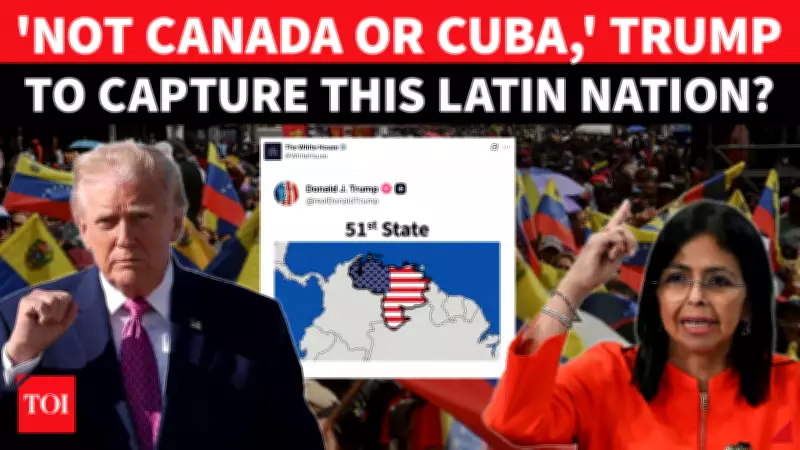
Donald Trump has reignited his controversial “51st state” narrative — but this time the target is Venezuela. In a dramatic Truth Social post, Trump shared an image of Venezuela draped in the American flag with the words “51st State,” triggering backlash and renewed geopolitical debate. The post came shortly after Venezuela’s interim president Delcy Rodríguez rejected any possibility of the country becoming part of the United States. The White House later reshared the image on X, further fueling controversy. Trump had earlier floated similar ideas involving Canada and Greenland, reviving questions about America’s global ambitions amid mounting domestic and international pressures.
Geopolitical Firestorm
Trump’s latest provocation comes at a time of heightened global tensions. The United States is currently engaged in a military conflict with Iran, and Trump is preparing for a high-stakes meeting with Chinese President Xi Jinping. Critics argue that the “51st state” rhetoric undermines diplomatic efforts and risks alienating key allies. The Venezuelan government has condemned the move as a violation of sovereignty, while international observers warn of potential escalation in the region.
Domestic and International Reactions
Within the United States, the post has drawn sharp criticism from Democrats and some Republicans, who view it as an unnecessary distraction from pressing issues like the Iran war and economic instability. Supporters, however, see it as a bold assertion of American power. On the international stage, Latin American nations have expressed solidarity with Venezuela, and the United Nations has called for restraint. The controversy is likely to dominate headlines as Trump prepares for his diplomatic engagements.

This is not the first time Trump has floated the idea of expanding US territory. His previous suggestions regarding Canada and Greenland were met with widespread ridicule and diplomatic pushback. However, the timing of the Venezuela post suggests a deliberate strategy to shift focus from domestic challenges, including ongoing protests and a struggling economy. As the situation unfolds, the world watches closely to see how this latest gambit will impact US foreign policy and global stability.