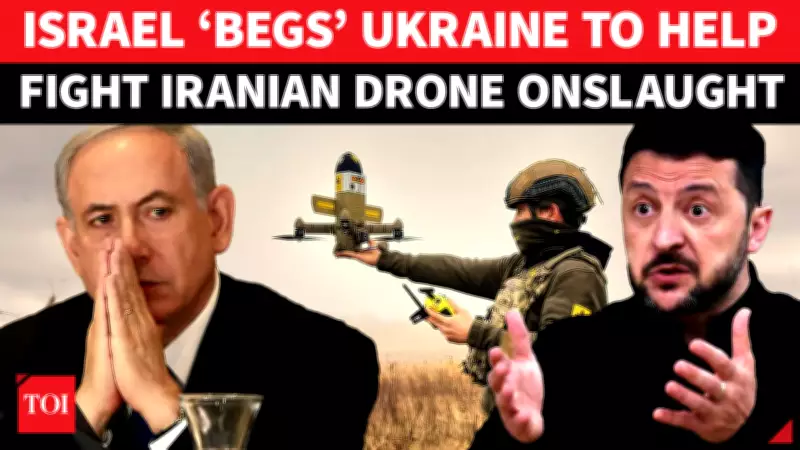
Israel Seeks Ukraine's Aid for Interceptors Amid Iranian Drone Onslaught
In a significant strategic development, Israel is confronting unprecedented battlefield challenges as it grapples with relentless waves of low-cost Iranian drones. These attacks are proving more difficult to intercept than traditional missile threats, prompting a notable shift in Israel's defense strategy.
New Battlefield Pressure Emerges
The Israeli defense forces are facing a new kind of pressure on the battlefield. Unlike conventional missile attacks that have defined previous conflicts, the current threat comes from swarms of inexpensive Iranian drones. These unmanned aerial vehicles are overwhelming existing defense systems and creating operational headaches for military planners.
Prime Minister Benjamin Netanyahu has initiated contact with Ukrainian authorities to explore potential assistance with interceptor technology. This move represents a striking departure from Israel's traditional defense partnerships and underscores the severity of the drone threat.

Why Iranian Drones Are So Challenging
The Iranian drone onslaught presents unique difficulties for defense systems:
- Cost-effectiveness: These drones are produced at a fraction of the cost of traditional missiles
- Quantity over quality: Attack waves consist of numerous drones that can saturate defense systems
- Technological adaptability: Continuous improvements in drone capabilities make interception increasingly complex
- Strategic deployment: Drones can be launched from multiple locations simultaneously
Ukraine's Relevant Experience
Ukraine brings valuable expertise to this situation, having developed substantial experience countering drone threats during its own conflicts. The country has refined interceptor technologies and defense strategies specifically designed to address similar aerial threats, making their assistance particularly relevant to Israel's current predicament.
This collaboration, if realized, would mark a notable development in international defense cooperation. It represents how modern warfare challenges are creating unexpected partnerships between nations facing similar asymmetric threats.
Broader Regional Implications
The escalating drone attacks and Israel's response have significant implications for regional security dynamics. The effectiveness of low-cost drone warfare could potentially reshape defense strategies across the Middle East and beyond, as nations recognize the need to develop more robust counter-drone capabilities.
Military analysts are closely monitoring this development, as successful drone defense strategies could influence how nations approach aerial defense in an era where inexpensive unmanned systems are becoming increasingly prevalent on battlefields worldwide.