Israel Sets Conditions for Limited Rafah Crossing Reopening
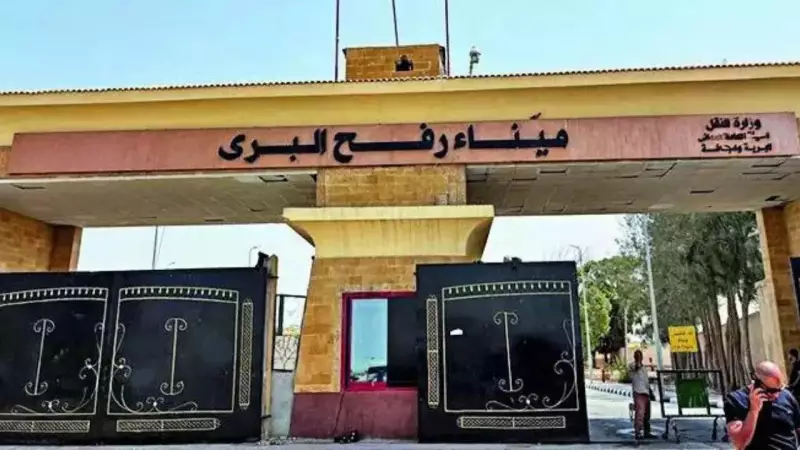
Israel declared on Monday that it would implement a limited reopening of the Rafah crossing between Gaza and Egypt, permitting pedestrian passage only under strict Israeli inspection mechanisms. This decision comes as part of a broader truce framework initially announced by US President Donald Trump in October, though the crossing has remained closed since Israeli forces assumed control during the ongoing conflict in the Palestinian territory.
Hostage Recovery as Prerequisite for Reopening
The Israeli government, through Prime Minister Benjamin Netanyahu's office, emphasized that the reopening is contingent upon two critical conditions:
- The return of all living hostages held in Gaza
- A complete effort by Hamas to locate and return the remains of all deceased hostages
Specifically, Israel is currently searching a cemetery in the Gaza Strip for the remains of Ran Gvili, the last hostage whose body remains in Palestinian territory. Gvili, a non-commissioned officer in the Israeli police's elite Yassam unit, was killed during Hamas's October 7, 2023 attack on Israel, with his body subsequently taken to Gaza.

International Pressure and Humanitarian Concerns
Visiting US envoys Steve Witkoff and Jared Kushner reportedly urged Israeli officials to reopen the Rafah crossing during weekend talks in Jerusalem. This diplomatic pressure aligns with repeated calls from world leaders and aid agencies for enhanced humanitarian access to Gaza, where over two years of war have devastated infrastructure and created severe shortages of essential supplies.
Ali Shaath, Gaza's newly appointed administrator, described Rafah as "more than a gate, it is a lifeline and a symbol of opportunity" during his appearance at the World Economic Forum in Davos. Before the current conflict erupted in October 2023, Rafah served as the sole gateway connecting Gaza's 2.2 million residents to the outside world and facilitating the entry of international humanitarian aid.
Uncertainties and Family Opposition
Significant questions remain about the practical implications of this limited reopening. It remains unclear whether medical patients will be permitted to leave Gaza for treatment in Egypt or other countries through the pedestrian passage.
Gvili's family has expressed strong opposition to advancing to the second phase of the ceasefire plan—which includes reopening Rafah—before receiving his remains. "First and foremost, Ran must be brought home," the family stated unequivocally on Sunday.
Broader Conflict Context
The Gaza war, sparked by Hamas's October 7, 2023 attack that killed 1,221 people according to Israeli figures, has resulted in catastrophic consequences. Israeli retaliation has flattened much of Gaza, compounding the territory's existing suffering from previous conflicts and a blockade imposed since 2007.
According to Gaza's health ministry, the two-year conflict has claimed at least 71,657 lives in the territory—figures the United Nations considers reliable. The first phase of the US-backed ceasefire agreement had stipulated that Hamas hand over all hostages in Gaza, with 251 people taken during the initial attack having since been returned, either living or deceased, except for Gvili.
Hamas's military wing, the Ezzedine Al-Qassam Brigades, stated through spokesman Abu Obeida that they had provided mediators with all available information regarding Gvili's body location, noting that Israel was searching one of the sites based on their transmitted intelligence.