

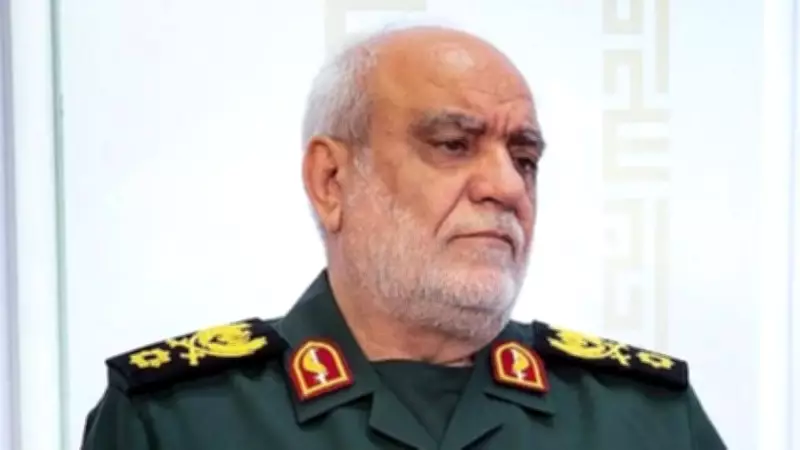
Israel Announces Elimination of Senior Iranian IRGC Commander Majid Khademi
In a significant escalation of hostilities, Israel confirmed on Monday that it had successfully targeted and killed Major General Majid Khademi, the head of the Islamic Revolutionary Guard Corps (IRGC) intelligence organization. This development marks day 38 of the intensifying Middle East conflict, with regional tensions reaching new heights.
Official Statement from Israeli Defense Minister
Israeli Defense Minister Israel Katz made the formal announcement, stating that "The Revolutionary Guard are shooting at civilians and we are eliminating the leaders of the terrorists." In comments reported by The Associated Press, Katz emphasized that "Iran's leaders live with a sense of being targeted. We will continue to hunt them down one by one."
Katz further revealed that Israeli operations had "severely damaged" Iran's critical steel and petrochemical industries. He declared a continued campaign to "crush the Iranian national infrastructure and lead to the erosion and collapse of the terrorist regime, and its capabilities to promote terror and fire at the state of Israel."

Iran's Response and Confirmation
The IRGC itself acknowledged Khademi's death in a post on its official Telegram channel, describing him as "the powerful and educated head of the intelligence organisation of the Islamic Revolutionary Guard Corps" who was "martyred in the criminal terrorist attack by the American-Zionist (Israel) enemy... at dawn today."
While the IRGC statement did not specify the exact location of the attack, multiple airstrikes were reported targeting residential areas around Tehran, Iran's capital, during the morning hours. This suggests the operation occurred within Iranian territory, representing a bold military move by Israel.
Broader Context of the Conflict
This incident represents the latest in a series of high-profile eliminations of Iranian leadership figures by the United States and Israel during their ongoing military campaign in Iran, which began on February 28. The initial attacks sparked immediate Iranian retaliation and have since evolved into a broader Middle East conflict.
The conflict has already claimed significant Iranian leadership, including the death of then-Supreme Leader Ayatollah Ali Khameini on February 28. He has been succeeded by his son, Mojtaba, whose current whereabouts remain unknown amid reports that he is recovering from war-related injuries.
Strategic Implications and Future Outlook
The elimination of a senior IRGC intelligence chief represents a substantial blow to Iran's military and security apparatus. Analysts suggest this could significantly disrupt Iran's intelligence operations and regional proxy networks. The targeting of industrial infrastructure further indicates Israel's strategy to weaken Iran's economic and military capabilities comprehensively.
As the conflict enters its 39th day, regional observers anticipate heightened Iranian retaliation and potential escalation. The situation remains fluid, with both sides demonstrating increased willingness to engage in direct confrontation beyond previous proxy warfare patterns.






