Israel Confirms Elimination of Seven Senior Iranian Security Leaders in Coordinated Tehran Strikes
In a significant escalation of regional tensions, Israel has officially confirmed the killing of seven senior figures within Iran's security leadership through a series of coordinated military strikes targeting Tehran. The operation, described as a "surprise attack" by the Israel Defense Forces (IDF), specifically aimed at Iran's senior command structure responsible for overseeing military operations and strategic weapons programs.
Targeted Iranian Leadership Figures
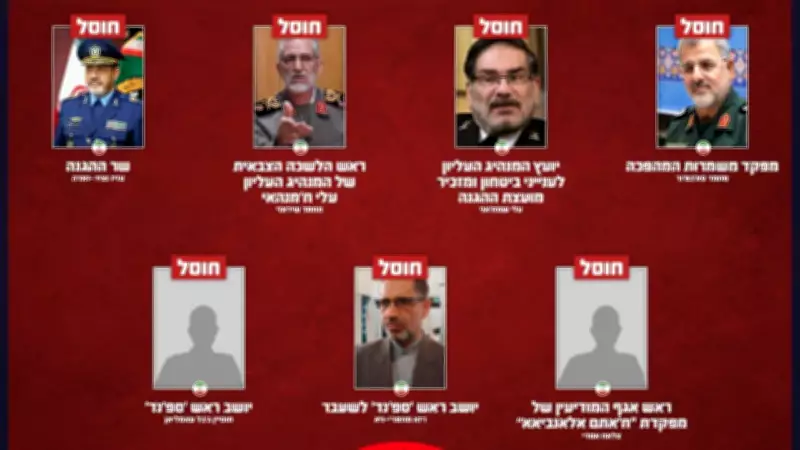
Among the confirmed casualties is Ali Shamkhani, a former commander of the IRGC Navy and army who served as a senior adviser to Supreme Leader Ali Khamenei. Israel had previously targeted Shamkhani during hostilities in June and initially believed he had been eliminated at that time.
The IDF also confirmed the death of Mohammad Pakpour, commander of the Islamic Revolutionary Guard Corps (IRGC). Israel accuses Pakpour of leading what it describes as a "plan to destroy Israel," overseeing missile and drone attacks, and supporting proxy groups throughout the Middle East region.

Additional senior officials killed in the strikes include:
- Salah Asadi, identified as chief of intelligence at Iran's military emergency headquarters
- Mohammad Shirazi, head of Khamenei's military bureau since 1989
- Aziz Nasirzadeh, Iran's defense minister and former air force chief, whom Israel alleges was responsible for long-range missile production, weapons transfers to allied groups, and oversight of SPND (an organization Israel links to advanced weapons development)
- Hossein Jabal-Amelian and Reza Mozafari-Nia, both associated with the SPND organization
Wider Joint Operation with United States
The strikes formed part of a broader joint operation conducted by Israel and the United States. US President Donald Trump characterized the campaign as "massive" and aimed at crippling Iran's military capabilities while preventing any potential advancement toward nuclear weapons development. In a video message addressing the Iranian people, Trump urged them to "take over your government" once military operations conclude.
Iranian Response and Regional Fallout
Iran responded to the strikes with waves of drone and missile attacks targeting both Israel and US military facilities located in Bahrain, Kuwait, and Qatar. According to US military reports, these retaliatory strikes resulted in no American casualties and caused only minimal damage to military bases. Israeli emergency services reported that dozens of missiles were fired toward Israel, with many successfully intercepted by defense systems.
Conflicting Reports About Supreme Leader
Reports emerging from Israeli media sources suggested that Supreme Leader Ali Khamenei himself may have been killed during the operation, with claims that his compound was among the first sites targeted. However, Iranian officials have firmly denied these reports, insisting that Khamenei remains alive. Tehran has yet to officially confirm the deaths of the senior security figures named by Israel in their announcement.
The military operation represents a significant escalation in the ongoing conflict between Israel and Iran, with potential implications for regional stability and international relations throughout the Middle East. The coordinated nature of the strikes and the high-ranking targets eliminated suggest a carefully planned operation aimed at disrupting Iran's military command structure at the highest levels.