Israel Grapples with Devastation Following Iranian Missile Assault
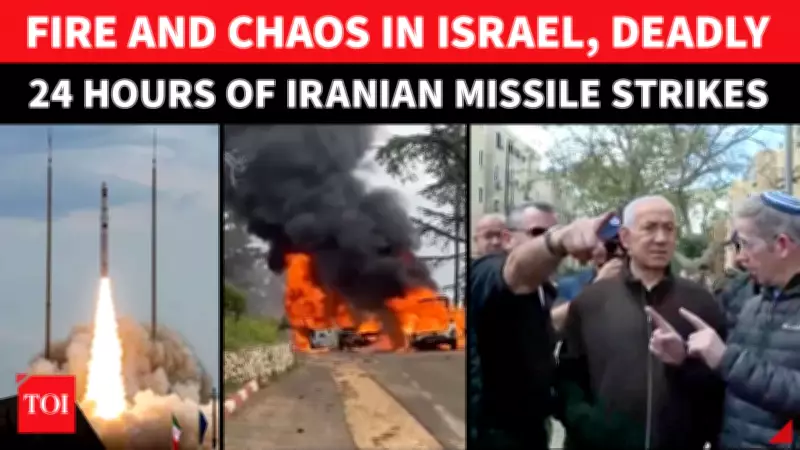
Israel is confronting scenes of widespread ruin and mounting casualties after a significant missile offensive launched by Iran targeted multiple urban centers across the nation. The attack, which struck on March 22, 2026, has precipitated a severe crisis, with Israeli authorities reporting substantial structural damage and numerous injuries amidst escalating regional hostilities.
Netanyahu Issues Stern Warning on Iran's Expanding Threat
Speaking from the city of Arad, Israeli Prime Minister Benjamin Netanyahu delivered a forceful statement, characterizing Iran as a global threat following the assaults. He accused Iranian forces of deliberately aiming at civilian populations and even targeting zones in proximity to Jerusalem's revered holy sites, actions he described as particularly egregious.
Furthermore, Netanyahu disclosed that Iran attempted a long-range missile strike directed toward Diego Garcia, a strategic island in the Indian Ocean, underscoring Tehran's rapidly advancing and expanding military capabilities. This revelation has amplified international apprehensions regarding the reach and sophistication of Iran's arsenal.

Ground Reports Detail Carnage and Structural Havoc
On-the-ground assessments from affected areas paint a grim picture of the aftermath:
- Tel Aviv: Emergency services confirmed at least 15 individuals sustained injuries during the strikes, with hospitals mobilizing to treat the wounded amid chaotic scenes.
- Dimona and Arad: These cities endured severe bombardment, resulting in widespread destruction of infrastructure, residential buildings, and public facilities. Initial reports suggest apocalyptic conditions in some neighborhoods.
Despite the Israeli Defense Forces (IDF) achieving an estimated 90 percent interception rate against the incoming projectiles, a concerning number of missiles managed to penetrate the nation's multi-layered defense systems, leading to the direct impacts and consequent devastation.
Regional Tensions Escalate Amid Broader Conflict Fears
The Iranian missile onslaught coincides with persistent attacks from Hezbollah militants along Israel's northern border, creating a multi-front security challenge for the Israeli military. This convergence of threats has significantly heightened the risk of a broader regional conflagration.
Global leaders and diplomatic entities are expressing intensifying concern over the potential for further escalation. The situation remains volatile, with analysts warning that the conflict could draw in additional state and non-state actors, destabilizing the entire Middle East and impacting international security dynamics.
The international community is closely monitoring developments, urging restraint while assessing the humanitarian and geopolitical ramifications of one of the most severe direct confrontations between Israel and Iran in recent history.