Israeli Military Claims Destruction of Iranian Fighter Aircraft at Tabriz Airport
The Israel Defense Forces (IDF) has announced a significant military operation targeting Iranian air capabilities, stating that Israeli forces successfully destroyed two Iranian fighter jets that were positioned for immediate departure from Tabriz airport in western Iran. This development comes as hostilities between the two nations continue to intensify across multiple fronts.
Precision Strikes Target Ready-to-Fly Aircraft
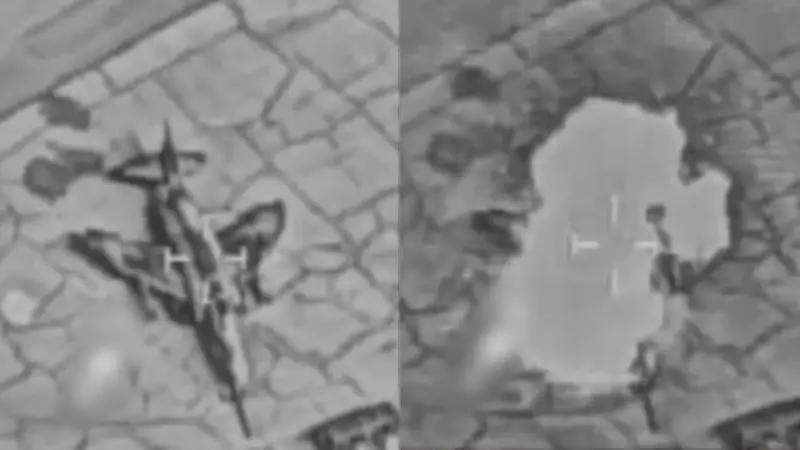
In an official statement released on social media platform X, the IDF confirmed that the targeted aircraft were F-4 and F-5 fighter jets belonging to what Israel describes as the "Iranian terrorist regime." The military emphasized that both aircraft were in a "ready-to-take-off" configuration when struck, suggesting they were prepared for imminent combat operations.
The IDF accompanied its announcement with video footage purportedly showing precision strikes hitting the two aircraft, followed by substantial explosions. "The Air Force attacked two ready-to-take-off F5 and F4 fighter jets of the Iranian terrorist regime," the military statement declared, providing visual evidence of the operation's execution.

Strategic Objectives Behind the Attack
According to the detailed IDF communiqué, the attack was strategically designed to achieve multiple objectives. "The attack was carried out in order to harm the activities of the Iranian Air Force and to deepen the damage to the regime's defense systems," the statement explained. Military analysts note that targeting aircraft on the ground represents a particularly effective tactic during periods of heightened tension, as it can significantly degrade an adversary's operational readiness without engaging in direct aerial combat.
The IDF further elaborated on its broader strategic posture, stating: "The IDF continues to attack the infrastructure of the Iranian terrorist regime in order to harm the regime and thwart threats to the rear of the State of Israel." This language underscores Israel's ongoing campaign against what it perceives as Iranian threats to its national security.
Context of Escalating Regional Conflict
This latest strike occurs within a complex landscape of escalating regional tensions. The attacks reportedly began early Saturday following what has been described as joint Israeli-American military operations against Iranian targets, referred to by some sources as "Operation Epic Fury." This represents just the most recent chapter in a series of exchanges between Israel and Iran that have included air raids, missile attacks, and various forms of military posturing.
The broader conflict has seen multiple theaters of engagement, with reports of:
- Missile strikes targeting US naval headquarters in Bahrain
- Explosions reported in Abu Dhabi and Doha
- Iranian attacks on US military bases across the Middle East under operations like "Truthful Promise 4"
- Disruptions to civilian air travel, including an AI Tel Aviv flight returning to India
Iranian Response and Regional Implications
As of the latest reports, Iranian authorities have not issued an immediate official comment regarding the alleged strike at Tabriz airport. This silence contrasts with previous instances where Iran has been quick to respond to perceived aggressions, potentially indicating either ongoing assessment or strategic deliberation about appropriate countermeasures.
Military experts observing the situation suggest that targeting aircraft on the ground represents a calculated escalation, as it directly impacts Iran's ability to project air power while avoiding the risks associated with aerial dogfights. The destruction of these fighter jets at Tabriz airport—a significant military facility in western Iran—likely represents both a tactical victory for Israel and a symbolic demonstration of its intelligence and strike capabilities deep within Iranian territory.
The ongoing conflict continues to unfold across multiple dimensions, with diplomatic, military, and economic implications for the entire Middle East region and beyond. As both nations maintain their respective positions, the international community watches closely for further developments that could either de-escalate tensions or propel the region toward broader confrontation.