

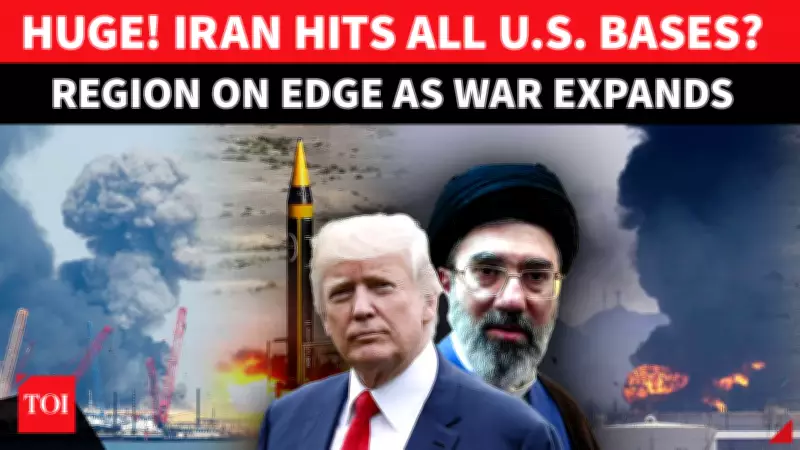
IRGC Launches Major Retaliatory Strikes on US and Israeli Targets
In a significant escalation of regional tensions, Iran's Islamic Revolutionary Guard Corps (IRGC) has announced a series of retaliatory strikes targeting United States military bases and Israeli cities. This aggressive move comes in direct response to the recent assassination of a key Iranian figure, Larijani, marking a dramatic intensification in the ongoing conflict between Iran and its adversaries.
Widespread Attacks Across the Middle East
The IRGC claims to have conducted drone and missile strikes on multiple US military installations throughout the region. According to their statements, the attacks targeted bases in several countries, including Kuwait, Iraq, Saudi Arabia, Qatar, the United Arab Emirates, Jordan, and Bahrain. These operations are portrayed as a coordinated effort to challenge US presence and influence in the Middle East, leveraging advanced military capabilities to strike at strategic locations.
Advanced Weaponry Deployed in Assaults
Iran utilized a range of sophisticated missiles in these strikes, such as the Qadr, Emad, Kheibar Shekan, and Haj Qassem models. Some of these missiles are reportedly capable of carrying multiple warheads, designed to overwhelm air defense systems and ensure maximum impact. The use of drone swarms further enhanced the scale and complexity of the attacks, demonstrating Iran's growing prowess in asymmetric warfare tactics.

Israeli Cities Under Fire
In addition to targeting US bases, the IRGC also claims to have struck key Israeli urban centers, including Tel Aviv, Haifa, Acre, and Beersheba. These attacks involved advanced missiles and drone swarms, aiming to inflict significant damage and disrupt daily life in Israel. The strikes on Israeli territory are framed as part of a broader revenge campaign, directly linking them to the killing of Larijani and escalating hostilities in the region.
Context and Implications
This escalation follows a period of heightened tensions, with Iran vowing retaliation for Larijani's death. The IRGC's actions signal a bold shift towards more direct military confrontation, potentially drawing in multiple nations and destabilizing the already volatile Middle East. The use of high-tech weaponry underscores Iran's commitment to projecting power and responding forcefully to perceived threats, raising concerns about further conflict and humanitarian impacts in the area.






