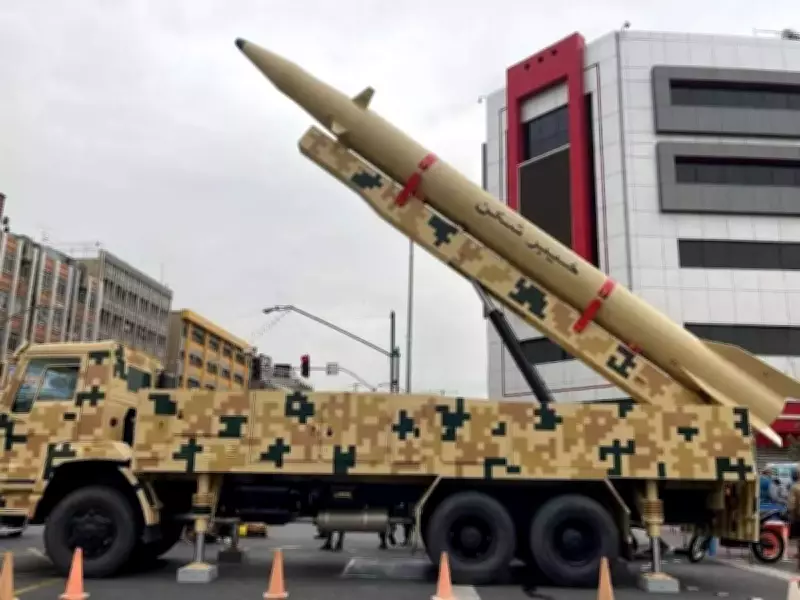
Iran's Military Arsenal Powers Sustained Strikes Against US and Israel
The conflict between the United States-Israel alliance and Iran has now entered its third week with no signs of abatement. Despite sustaining significant damage, Iran continues to demonstrate formidable military capabilities, targeting Gulf states hosting US military installations and striking civilian infrastructure across the region.
Massive Barrage of Missiles and Drones
According to detailed reports from The Wall Street Journal, Iran has launched an astonishing arsenal of more than 290 missiles and 500 drones specifically at Israel since hostilities began on February 28. This relentless assault has inflicted substantial damage while forcing extensive deployment of air defense systems across the region.
Iran's Diverse Weapon Systems
Shahed-136 Kamikaze Drone: This one-way attack UAV has emerged as one of Tehran's most discussed weapons in the current conflict. Developed by the Iran Aircraft Manufacturing Industrial Company (HESA), the Shahed-136 can reach speeds up to 185 km/h with an impressive 2,000 km range. Capable of carrying 40 kg warheads, these portable drones can be launched from military or commercial vehicles. Russia has rebranded this system as Geran-2, highlighting the strategic alliance between Tehran and Moscow.

Shahed-131 Variant: The smaller Shahed-131 drone, known in Russia as Geran-1, serves similar precision kamikaze functions with a 900 km operational range.
Sejjil-2 Ballistic Missile: Representing Iran's advanced missile technology, the Sejjil-2 is a two-stage, solid-fuel medium-range ballistic missile developed domestically. With approximately 2,000 km range and capability to deliver 700 kg warheads, this system poses significant regional threats. The solid-fuel propulsion allows quicker launches compared to liquid-fuel alternatives, enhancing survivability against preemptive strikes.
Kheibar Shekan Missile: Iranian media reports this missile features 1,450 km range with satellite guidance and maneuverable warhead technology. Measuring about 4 meters long and weighing 1,500 kg, it can reportedly achieve atmospheric speeds up to 19,500 km/h, presenting interception challenges for even advanced air defense systems.
Khorramshahr-4 Long-Range Missile: Claimed by Iran to have targeted Tel Aviv's Ben Gurion airport, this fourth-generation missile boasts approximately 2,000 km range with capacity for over one tonne of high explosives. Iranian officials assert it can reach Mach 16 speeds outside the atmosphere and Mach 8 within it.
Controversial and Advanced Munitions
Cluster Munitions: Iran has deployed ballistic missiles equipped with cluster munition warheads that disperse dozens of explosive bomblets across wide areas. These weapons are particularly controversial in modern warfare due to their area-effect nature rather than precision targeting.
Ghadr-110 Advanced Ballistic Missile: As the most sophisticated variant in the Ghadr family, this two-stage solid-fuel missile offers 1,500-2,000 km range with potential for further development up to 5,000 km. Experts suggest possible adaptation for anti-satellite operations.
Fattah-2 Hypersonic System: Reportedly making its operational debut in this conflict, the Fattah-2 utilizes hypersonic glide vehicle technology rather than conventional ballistic re-entry vehicles. Iranian claims of Mach 15 speeds and 1,400 km range with 200 kg warheads, if accurate, would present significant challenges to existing missile defense architectures.
Emad Maneuverable Missile: Unveiled in 2025, the Emad features a course-adjusting warhead during re-entry to evade interception systems. With 1,700 km range and 750 kg warhead capacity, this liquid-fuel missile delivers substantial destructive potential against strategic targets despite longer launch preparation requirements.
Conflict Origins and Regional Impact
The current hostilities began with coordinated US-Israel strikes across Iran on February 28, resulting in the death of Supreme Leader Ayatollah Ali Khamenei. His successor, son Mojtaba Khamenei, is reportedly in serious condition following the attacks.

Tehran has effectively blocked the strategic Strait of Hormuz, a critical waterway transporting approximately 20% of global crude oil. This action has prompted former President Donald Trump to urge allied nations to deploy naval escorts for commercial vessels navigating the region.
The sustained conflict demonstrates Iran's determination to utilize its diverse military arsenal despite significant international pressure, with weapon systems ranging from relatively simple kamikaze drones to sophisticated hypersonic missiles reshaping modern warfare dynamics in the Middle East.