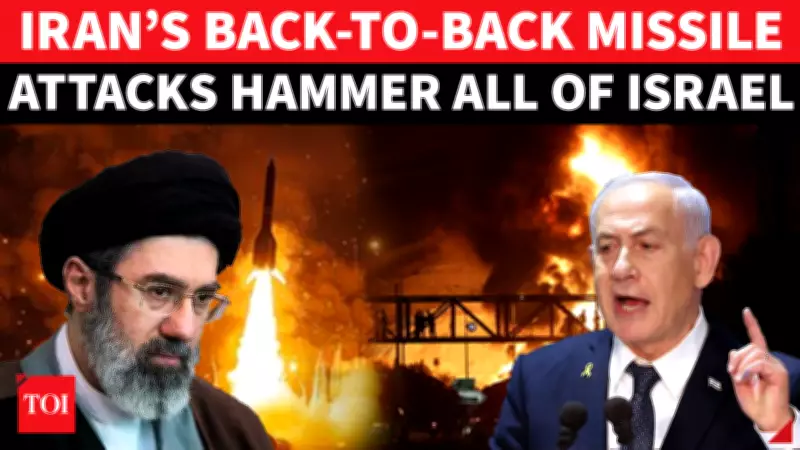
Iran Unleashes Unending Missile Barrage on Israeli Cities in Retaliation for Natanz
Central Israel was rocked by a series of powerful explosions on March 22, 2026, as Iran launched a fresh and sustained wave of missile attacks, triggering nationwide emergency sirens and alerts. The Israeli Defense Forces (IDF) confirmed active interception efforts as civilians across the country rushed to shelters, awaiting the all-clear signal. This alarming escalation follows earlier strikes that injured nearly 200 people in the cities of Dimona and Arad, raising serious concerns about potential failures in Israel's air defense systems.
Escalating Tensions and Retaliatory Claims
Iran has openly claimed responsibility for the attacks, stating they are specifically targeting nuclear-linked sites within Israel as direct retaliation for the Natanz incident. The Iranian government asserts this military action is a calculated response to what it describes as Israeli aggression. In a dangerous tit-for-tat development, Israeli counter-strikes have been reported in Tehran, indicating that tensions are not only escalating but rapidly spiraling into a broader and more perilous regional conflict.
The situation on the ground remains highly volatile, with emergency services on high alert and military assets deployed across multiple fronts. The continuous nature of the missile launches, described as "unending" by observers, suggests a significant and coordinated effort by Iranian forces to overwhelm Israeli defenses.

Humanitarian Impact and Regional Implications
The earlier attacks on Dimona and Arad resulted in nearly 200 casualties, with many suffering injuries from the blasts and subsequent structural collapses. Hospitals in the region are reportedly operating at full capacity, treating the wounded amid the ongoing threat of further strikes. The psychological impact on the civilian population is profound, with many experiencing repeated shelter alerts and the constant fear of incoming projectiles.
This conflict now threatens to draw in neighboring states and global powers, potentially destabilizing the entire Middle East. The targeting of nuclear-associated sites by Iran and the reciprocal strikes by Israel create a scenario where miscalculation could lead to catastrophic consequences. International diplomatic channels are actively engaged, but the rapid pace of military actions complicates de-escalation efforts.
Military and Strategic Analysis
The IDF's interception efforts, while partially successful, face unprecedented challenges due to the scale and persistence of the Iranian missile barrage. Military analysts note that the attacks appear designed to test and penetrate Israeli air defense layers, including the Iron Dome and Arrow systems. The strikes on Dimona, a city known for its nuclear research facility, underscore the strategic nature of Iran's targeting priorities.
- Sustained missile launches from multiple Iranian launch sites
- IDF deploying multi-layered defense systems in response
- Civil defense protocols activated across all major Israeli population centers
- International monitoring of nuclear facility security heightened
As reports of Israeli strikes in Tehran emerge, the conflict enters a new phase of direct state-on-state military engagement beyond proxy warfare. The global community watches with apprehension, recognizing that this escalation could redefine security dynamics in the region for years to come.