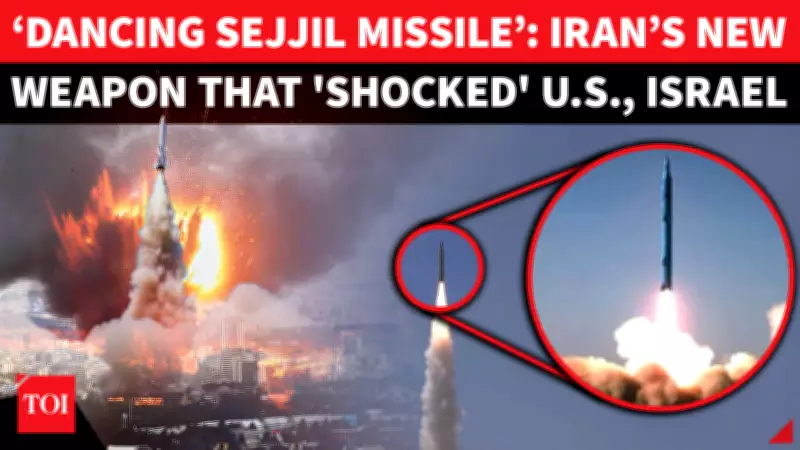
Iran's Sejjil Ballistic Missile Makes Combat Debut in Major Escalation
Iran has launched the 54th wave of attacks in its ongoing military campaign, marking a substantial escalation in the conflict with Israel and the United States. The latest strikes reportedly include the first-ever deployment of the Sejjil ballistic missile, a sophisticated weapon system that has long been feared by regional adversaries.
Technical Specifications and Strategic Implications
The Sejjil is a solid-fuel, two-stage medium-range ballistic missile capable of carrying warheads weighing up to 1,000 kilograms across distances of 2,000 to 2,500 kilometers. This places numerous strategic targets within its reach, including Israel, Saudi Arabia, Turkey, and several key U.S. military installations throughout the Middle East.
Military analysts emphasize that the missile's solid-fuel technology provides a rapid launch capability that significantly reduces warning time for potential targets. This technological advancement extends Iran's strategic reach and complicates defensive measures for nations in the region.

Official Justification and Regional Context
The Islamic Revolutionary Guard Corps (IRGC) has described this operation as retaliation for recent strikes on civilian workers. This justification comes amid heightened tensions that have seen multiple escalations in recent weeks, with Iran previously declaring the Persian Gulf off-limits to American ships and issuing stark demands to both the United States and Israel.
The deployment of the Sejjil missile represents a significant milestone in Iran's military capabilities. Unlike liquid-fuel missiles that require lengthy preparation times, solid-fuel systems like the Sejjil can be launched with minimal notice, presenting a more immediate threat to regional security.
Broader Conflict Dynamics
This latest development occurs against a backdrop of increasing regional instability. Recent related incidents include:
- Rumors about Israeli Prime Minister Netanyahu's status following his absence from a security meeting
- A tragic KC-135 crash in Iraq that claimed six American soldiers
- Iran's declaration making the Persian Gulf off-limits to U.S. vessels
- Threats to Iran's oil infrastructure and warnings to Gulf nations
- Hezbollah's aggressive statements alongside Israeli military actions
- An explosion at a Jewish school in Amsterdam raising concerns about conflict spillover
The introduction of the Sejjil missile into active combat operations signals Iran's willingness to escalate the conflict with advanced weaponry that reduces response time for defensive systems. This development will likely prompt reassessments of regional defense strategies and could influence diplomatic efforts to de-escalate tensions in the Middle East.