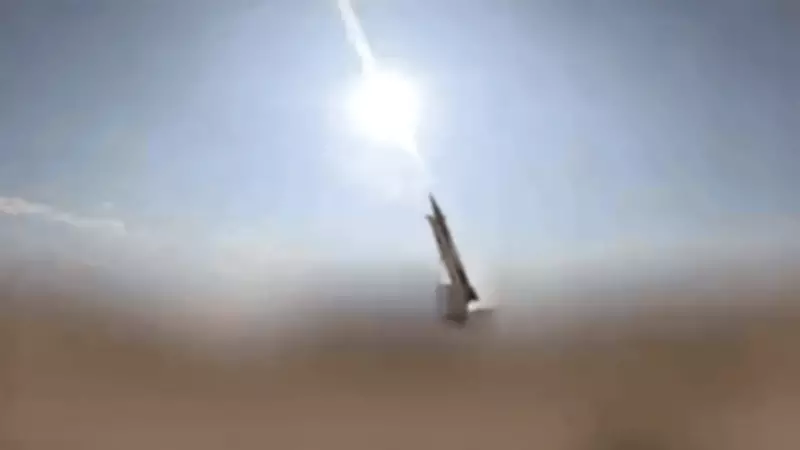
Iran's Sejjil-2 'Dancing Missile' Makes Combat Debut in War Against Israel
In a significant escalation of hostilities, Iran's Islamic Revolution Guard Corps (IRGC) has utilized the advanced Sejjil-2 ballistic missile for the first time since the outbreak of the US-Israeli war that commenced on February 28, 2026. This deployment marks a pivotal moment in the ongoing military campaign, as Tehran launched a new round of missile strikes targeting strategic locations in Tel Aviv on Sunday.
Retaliatory Strikes and Military Campaign Details
The IRGC carried out these latest attacks as part of its ongoing retaliation against Israel, specifically under the 54th wave of missile strikes in 'Operation True Promise 4'. According to statements from the IRGC's Public Relations Office, the barrage included a mix of ballistic missiles such as Khorramshahr, Khaybar-shekan, Qadr, and Emad, alongside the strategic Sejjil missile.
Iranian officials asserted that the missiles were aimed at sites linked to Israeli military operations, decision-making infrastructure, defence industries, and areas where Israeli forces were concentrated. The Khorramshahr missile, notable for carrying a warhead weighing approximately two tonnes, was also employed in these strikes, highlighting the intensity of the assault.

Background of the Conflict and Iranian Response
The war involving the United States, Israel, and Iran erupted after large-scale strikes were conducted inside Iran, reportedly in response to the killing of Supreme Leader Ali Khamenei and several senior military commanders and civilians. These initial attacks included air strikes on both military and civilian sites across Iran, resulting in significant damage and casualties.
In retaliation, Iran has launched multiple waves of missiles and drones targeting Israeli territory and US military positions throughout the region. This context underscores the heightened tensions and the strategic use of advanced weaponry like the Sejjil-2 in the conflict.
What Are Sejjil Missiles?
The Sejjil missile is one of Iran's most sophisticated ballistic missile systems, developed domestically as a two-stage, solid-fuel medium-range ballistic missile (MRBM). It boasts a reported range of about 2,000 kilometres, enabling it to reach targets across much of the Middle East. According to the Centre for Strategic and International Studies (CSIS), it can carry a single warhead weighing around 700 kilograms.
Key advantages of the Sejjil system include its solid-fuel propulsion, which allows for quicker launches compared to liquid-fuel missiles, making it harder to detect or destroy pre-emptively. Additionally, the missile is road-mobile, meaning it can be transported and launched from mobile platforms, enhancing its operational flexibility and survivability.
Development and History of the Sejjil Missile
Development of the Sejjil missile began in the late 1990s, building upon earlier Iranian missile programs such as the Zelzal short-range ballistic missile. The first successful test launch occurred in 2008, with subsequent tests in 2009 aimed at improving guidance and navigation systems. Over the years, additional tests were conducted, including one that reportedly flew nearly 1,900 kilometres.
Iran has publicly displayed the missile during military parades alongside other systems like the Shahab-3 and Ghadr-1 missiles. After a period of inactivity, the Sejjil resurfaced in 2021 as part of the January Great Prophet 15 military exercises, demonstrating its continued relevance in Iran's arsenal.
The nickname 'dancing missile' is attributed to the Sejjil-2, though specific details on its origin remain part of its lore within military circles. This deployment in the current war underscores Iran's commitment to leveraging advanced technology in its strategic operations against perceived adversaries.