Iran's Missile Arsenal: A Comprehensive Analysis of Strike Capabilities
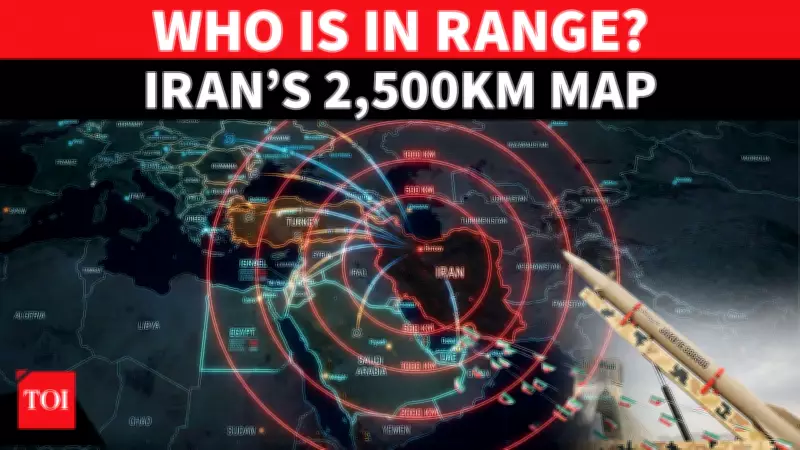
Iran has systematically constructed the most extensive missile arsenal in the Middle East, a development that significantly alters regional and global security dynamics. This buildup extends far beyond Iran's immediate borders, creating a complex web of strategic threats that now reaches into Europe and North Africa.
The Architecture of Iran's Missile Cities
Tehran's military strategy centers around what defense analysts term "missile cities" - sophisticated underground facilities that house and launch various missile systems. These installations represent a fundamental reimagining of modern warfare infrastructure, designed to withstand aerial bombardment while maintaining operational readiness.
The Iranian arsenal encompasses multiple layers of strike capabilities:

- Short-range ballistic missiles capable of reaching neighboring countries within minutes
- Medium-range systems that threaten targets across the Middle East
- Long-range missiles with the potential to strike European and North African territories
Strategic Implications for Regional Powers
This expanded missile capability creates significant strategic challenges for multiple nations. United States military bases throughout the Middle East now operate within Iranian missile range, requiring enhanced defensive measures and contingency planning. The recent reports of long-distance targeting attempts on Diego Garcia, a critical US military installation in the Indian Ocean, underscore how Tehran's ambitions have grown beyond regional concerns.
Israel faces particular vulnerability given its proximity to Iran and ongoing tensions between the two nations. The development of advanced missile systems capable of penetrating Israeli air defenses represents a persistent security concern for Tel Aviv and its allies.
The Evolution of Iranian Missile Technology
Iran's missile program has evolved through several generations of technological advancement. Early systems focused on battlefield support and regional deterrence, while current developments emphasize longer ranges, improved accuracy, and enhanced survivability against countermeasures.
Key aspects of this technological progression include:
- Increased payload capacities allowing for more destructive potential
- Improved guidance systems enhancing strike accuracy
- Mobile launch platforms that complicate detection and targeting
- Development of hypersonic capabilities that reduce interception windows
International Response and Future Projections
The international community has responded to Iran's missile expansion with a combination of diplomatic pressure, economic sanctions, and military preparedness. Regional powers have accelerated their own missile defense programs, while global actors monitor Tehran's capabilities with increasing concern.
Looking forward, defense analysts project continued Iranian investment in missile technology, with particular focus on extending operational ranges and developing countermeasures against advanced air defense systems. This ongoing development ensures that Iran's missile arsenal will remain a central factor in Middle Eastern security calculations for the foreseeable future.
The strategic landscape has been fundamentally altered by Tehran's missile ambitions, creating new challenges for conflict prevention, arms control negotiations, and regional stability. As capabilities continue to evolve, the international community faces complex decisions regarding engagement, deterrence, and risk management in this volatile security environment.