Iran's Military Independence Persists After Khamenei's Death
In a significant development following the demise of Supreme Leader Ayatollah Ali Khamenei and several military commanders in recent US and Israel strikes, Iran remains resolute in its military posture. The Islamic Revolutionary Guard Corps (IRGC) is now operating autonomously, leveraging its extensive and diverse missile stockpile along with advanced drone capabilities to confront adversaries and strike strategic US assets in the Gulf.
IRGC's Autonomous Operations Under Pre-Death Instructions
The IRGC, established by Ayatollah Ruhollah Khomeini in May 1979, traditionally functions independently of Iran's civilian government, reporting solely to the supreme leader. Post-Khamenei's death, the corps is adhering to advance directives issued by him prior to his passing. This stance was echoed by Iran's Foreign Minister Abbas Araghchi in a recent Al Jazeera interview, where he clarified, "What occurred in Oman (the attack on its port) was not our decision... Our military units are currently independent and somewhat isolated, acting on general instructions provided to them beforehand."
Rebuilding and Expanding Iran's Missile Arsenal
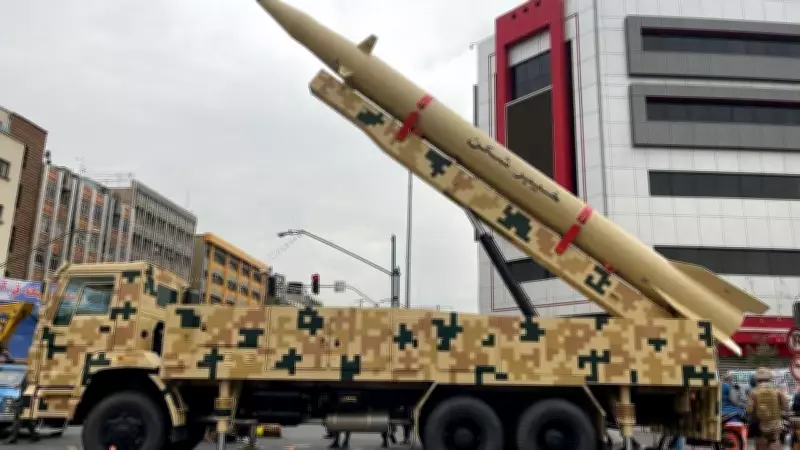
Prior to Israel's "Operation Rising Lion" initiated last June against Iran, Tehran possessed an estimated 3,000 missiles. This inventory was halved to 1,500 by the conflict's conclusion. However, Iran has since aggressively replenished its stockpile. According to the latest assessments from the Israel Defence Forces, the arsenal has now grown to 2,500 missiles this year. Iran's longest-range ballistic missiles are capable of traveling between 2,000 and 2,500 kilometers, effectively placing Israel and multiple US-associated military bases across West Asia within striking distance. It is important to note, however, that these missiles do not have the range to reach the United States mainland.

Detailed Breakdown of Iran's Missile Capabilities
Iran's missile arsenal is categorized into various types, each with specific ranges and capabilities:
- Short-Range Ballistic Missiles: Include Shahab-1-Scud B (up to 300 km), Shahab-2-Scud C (500 km), Qiam-1 (650 km), Fateh-110 (300 km), Fateh-313 (500 km), Raad-500 (500 km), Zolfaghar (700 km), and Dezful (1,000 km).
- Medium-Range Ballistic Missiles: Comprise Shahab-3 (1,300 km), Ghadr (1,600 km), Emad (1,800 km), Khorramshahr-1, -2, and -4 (2,000-3,000 km), Fattah-1 (1,400 km), Fattah-2 (1,500 km), Haj Qassem (1,400 km), Qassem Basir (1,200 km), Kheibar Shekan (1,450 km), and Sejjil (2,000 km).
- Land Attack Cruise Missiles: Feature Soumar (range unspecified), Hoveizeh (1,350 km), Ya Ali (700 km), and Paveh (1,650 km).
This diverse and expanding arsenal underscores Iran's continued military readiness and strategic autonomy in the region, even amid leadership changes.