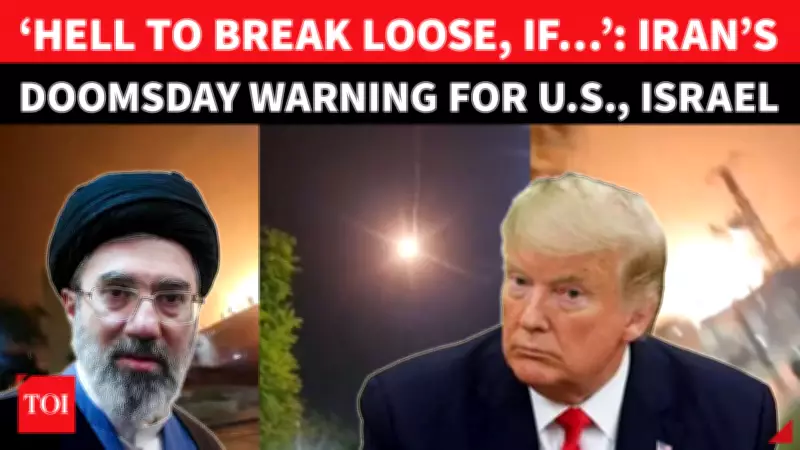
Iran's 'HELLFIRE' Declaration: A Stark Warning to the US and Israel
In a dramatic escalation of tensions, Iran has issued one of its most severe warnings to date, threatening devastating retaliation against the United States and Israel if Iranian infrastructure comes under attack. The warning, delivered by top commander Ali Abdollahi, signals a dangerous turning point in the ongoing conflict, raising fears of a wider regional war with potential global consequences.
Operation True Promise 4 Intensifies
As part of Operation True Promise 4, Tehran claims to have already launched dozens of missile and drone waves targeting strategic sites. This military campaign is intensifying, with coordination reported from allied groups such as Hezbollah and Yemen-based forces. The involvement of these factions risks expanding the conflict beyond direct state actors, creating a complex and volatile battlefield scenario.
The warning from Commander Abdollahi was explicit: any attack on Iranian infrastructure would be met with overwhelming force, described in stark terms as opening the "gates of hell." This rhetoric underscores the high stakes and the potential for massive escalation if tensions spiral further out of control.

Regional and Global Implications
The conflict's expansion threatens to destabilize the entire Middle East, with implications for global security and economy. Key points of concern include:
- Increased military engagements involving multiple nations and non-state actors.
- Potential disruptions to critical infrastructure and trade routes, such as those in the Red Sea region.
- Rising fears of a broader war that could draw in major powers and lead to significant humanitarian crises.
Recent reports highlight the volatile nature of the situation, with incidents such as alleged aircraft shoot-downs and data center attacks adding to the chaos. The coordination between Iran, Hezbollah, and Yemeni forces suggests a unified front that could challenge regional stability.
Background and Context
This warning comes amid a series of provocations and retaliatory strikes between Iran, the US, and Israel. Historical tensions, combined with recent military actions, have created a powder keg scenario. The use of terms like "HELLFIRE" in official declarations reflects the severity of Iran's stance and its readiness to respond aggressively to perceived threats.
As the situation develops, international observers are closely monitoring for any signs of de-escalation or further military moves. The risk of miscalculation or unintended escalation remains high, given the complex web of alliances and hostilities in the region.
In summary, Iran's latest warning marks a critical juncture in the Middle East conflict, with the potential for devastating outcomes if diplomacy fails to curb the rising tide of violence. The world watches anxiously as events unfold, hoping for a peaceful resolution to avoid the "hellfire" of war.