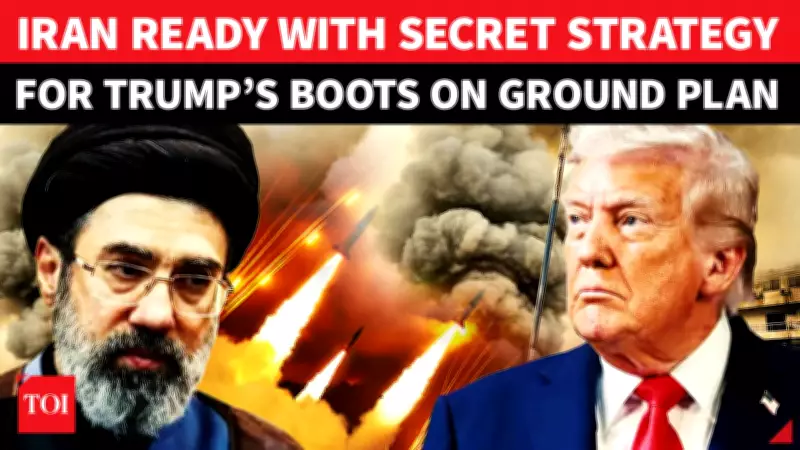
Iran Unveils 'Crush America' Strategy As Trump Considers Ground Invasion
In a dramatic escalation of Middle East tensions, Iran has publicly revealed its long-prepared asymmetrical warfare strategy, directly warning United States forces against any potential ground invasion. A senior Iranian defense official has claimed that Tehran has spent decades training specifically to counter American military power through unconventional tactics and guerrilla warfare methods.
Escalating Military Posturing
The revelation comes amid emerging reports that the United States is considering "boots on the ground" plans targeting Iran's nuclear and missile infrastructure. This potential military action has created a rapidly deteriorating security situation, with both nations preparing for worst-case scenarios that could trigger broader regional conflict.
The Islamic Revolutionary Guard Corps (IRGC) has issued stark warnings about a crushing response to any aggression against Iranian territory or interests. Iranian military officials have emphasized their readiness to employ asymmetrical warfare techniques designed to neutralize technological and numerical advantages held by conventional forces.

Decades of Preparation
According to Iranian defense authorities, the country's military has been developing and refining asymmetrical warfare capabilities since the 1980s. This preparation includes:
- Extensive training in guerrilla tactics and unconventional warfare
- Development of specialized units for asymmetric operations
- Strategic planning for urban and difficult terrain combat scenarios
- Integration of proxy forces and allied militias into defense plans
The timing of this revelation appears calculated to deter potential US military action while demonstrating Iran's readiness to defend its nuclear program and regional influence. Military analysts note that asymmetrical warfare represents Iran's most viable strategy against a technologically superior adversary like the United States.
Regional Implications and Global Concerns
As both sides intensify their military posturing, fears are growing across the Middle East about the potential for a broader and unpredictable conflict. Regional allies and neighboring countries are closely monitoring the situation, concerned about spillover effects and regional destabilization.
The current standoff represents one of the most serious escalations in US-Iran relations in recent years, with both nations appearing to move closer to direct military confrontation. Diplomatic channels remain strained, and the window for de-escalation appears to be narrowing as military preparations accelerate on both sides.
International observers warn that any direct conflict between the United States and Iran would have far-reaching consequences beyond the Middle East, potentially affecting global energy markets, international shipping routes, and regional security architectures that have been in place for decades.