

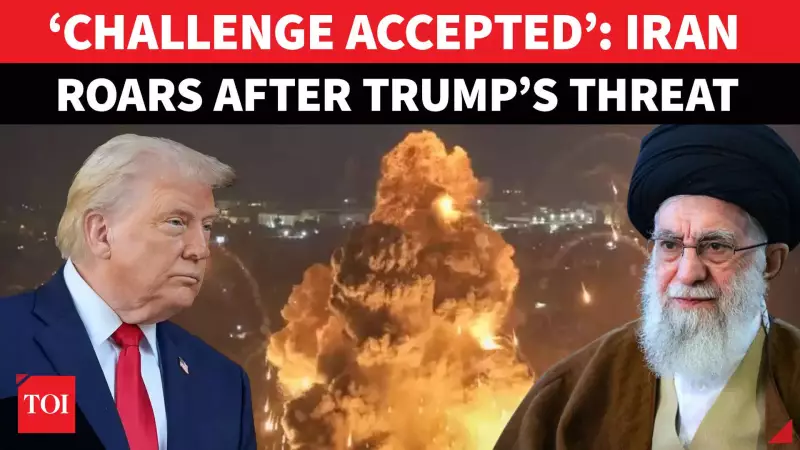
Geopolitical tensions have escalated dramatically following a sharp public exchange between the United States and Iran, raising fears of a potential military confrontation. The war of words centres on Iran's nuclear and missile ambitions, with both sides issuing stark warnings.
Trump's Warning and Iran's Defiant Retort
U.S. President Donald Trump has issued a clear threat of overwhelming military action against Iran. He stated that such a response would be triggered if Tehran advances its nuclear capabilities or continues to develop its missile program. This warning, delivered publicly, marks a significant hardening of the US stance.
In a firm and immediate rebuttal, Iranian leaders have not only rejected the ultimatum but have also accepted the challenge. The President of Iran and other senior officials have vowed a severe and decisive response to any act of aggression from the United States. They have specifically promised a 'regret-inducing response', signalling their readiness for a confrontation.

Iran's Stance: A Defensive and Non-Negotiable Program
Tehran has consistently defended its strategic programs, insisting that its missile development is purely for defensive purposes. Iranian authorities have categorically stated that this program is non-negotiable. They argue that U.S. demands to halt it constitute a violation of international agreements and an infringement on Iran's sovereign rights.
The Iranian position leaves little room for diplomatic compromise on this front, setting the stage for a continued standoff. The rhetoric from both capitals has grown increasingly hostile, with each side reinforcing its red lines.
Global Alarm and Calls for Restraint
The rapidly escalating situation has alarmed the international community. Global powers, including Russia, are actively urging both the United States and Iran to exercise maximum restraint. There is a palpable fear within diplomatic circles that a single miscalculation or misinterpreted action could spiral into a wider regional conflict.
Analysts warn that such a conflict would have severe and far-reaching consequences, destabilising an already volatile region and impacting global security and energy markets. The international calls for de-escalation highlight the high stakes involved in this latest episode of US-Iranian hostility.
The situation remains fluid and highly dangerous. As of December 31, 2025, the world watches anxiously to see if the heated rhetoric will translate into action or if diplomatic channels can be opened to defuse the crisis.






