

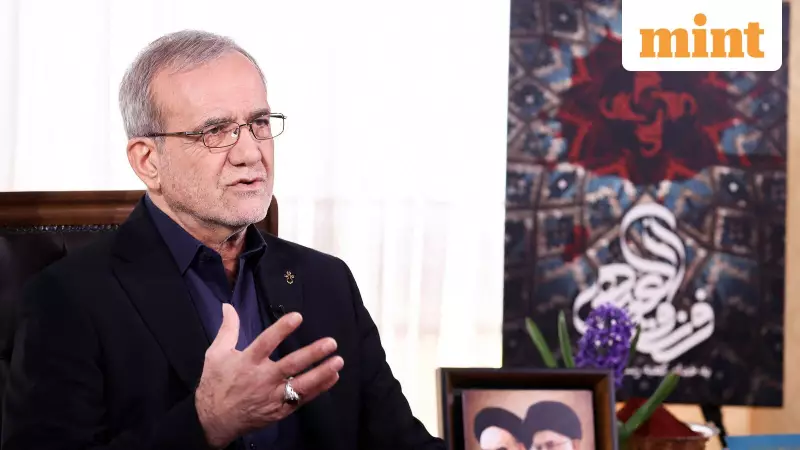
Iranian President Masoud Pezeshkian has issued a stark warning to the United States and Israel, stating that any attack on Tehran would be met with a "more decisive response." The president framed the ongoing tensions as a "full-fledged war" that he claims is more severe than Iran's conflict with Iraq in the 1980s.
A Stark Warning Amid Rising Tensions
The warning was delivered on Saturday, 28 December 2025, just ahead of a scheduled meeting between Israeli Prime Minister Benjamin Netanyahu and US President Donald Trump on the following Monday. In an interview published on the website of Supreme Leader Ayatollah Ali Khamenei and cited by Al Jazeera, Pezeshkian laid out Iran's position clearly.
"We are in a full-fledged war with America, Israel and Europe," President Pezeshkian stated. He accused these nations of not wanting Iran "to stand on its feet." Despite acknowledging internal challenges, he emphasised the current strength of Iran's military forces, claiming they are now more robust in terms of equipment and manpower than during previous confrontations.

Historical Context and Recent Provocations
Pezeshkian's alarming comparison of the current situation to the deadly Iran-Iraq war of the 1980s underscores the gravity with which Tehran views the present standoff. This rhetoric follows a series of escalatory actions over the preceding months.
Six months prior, Israel and the US carried out strikes on Iranian territory. Furthermore, in September, European powers including France, Germany, and the United Kingdom reinstated United Nations sanctions on Iran over its controversial nuclear programme. These events have collectively heightened the state of confrontation, leading to the president's latest, strongly-worded declaration.
Iran's Military Posture and Regional Implications
President Pezeshkian's statement serves as a public affirmation of Iran's readiness to defend itself. "Our dear military forces are doing their jobs with strength," he said, projecting confidence despite admitting to existing problems within the country. The core of his message was a direct threat: "So, if they want to attack, they will naturally face a more decisive response."
This public warning from the highest levels of the Iranian government significantly raises the stakes in an already volatile region. It directly addresses the upcoming Netanyahu-Trump meeting, signalling that Tehran is closely monitoring Western and Israeli diplomacy and is prepared to retaliate forcefully against any perceived aggression.
The situation remains fluid and highly sensitive, with global powers watching for the next development. Pezeshkian's framing of the conflict as an existential "full-fledged war" suggests a long-term, entrenched stance from Iran, potentially closing doors for near-term de-escalation.






