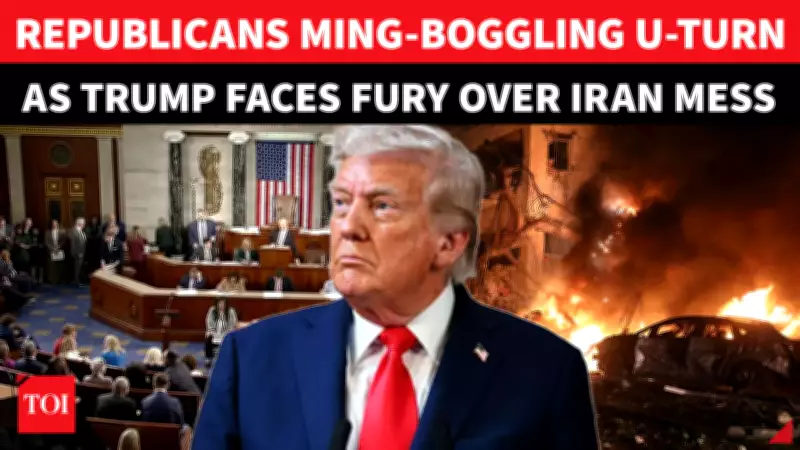
Political tensions are escalating in Washington as lawmakers clash over President Donald Trump's handling of the Iran conflict. A Democrat-backed War Powers Resolution aimed at limiting Trump's authority to continue military action against Iran without Congressional approval was abruptly pulled from the House floor after Republican leaders decided not to hold the vote amid concerns over support.
Resolution Pulled Amid GOP Concerns
The resolution, introduced by Gregory Meeks, is part of a broader push by Democrats in both the House and Senate to reassert Congress' constitutional role in authorizing war. Lawmakers critical of the administration argue that the conflict risks dragging the United States deeper into another prolonged Middle East confrontation. The decision to cancel the vote highlights deep divisions within the Republican Party over how to handle the escalating situation in Iran.
Debate Postponed to June
The issue is now expected to return for debate in June, while pressure also builds in the Senate, where several lawmakers from both parties have raised concerns over executive war powers and the growing costs of the Iran conflict. The cancellation of the vote has exposed the fragility of the GOP's unity on foreign policy, with some Republicans expressing unease about the direction of the administration's strategy.

Growing Bipartisan Concerns
Senators from both sides of the aisle have voiced apprehensions about the lack of congressional oversight in the ongoing military engagement. The War Powers Resolution, if passed, would have required the president to seek explicit authorization from Congress for further military action against Iran. The move comes amid reports of rising casualties and financial burdens associated with the conflict, prompting calls for a reassessment of U.S. involvement.
As the debate continues, the political landscape in Washington remains volatile, with the Iran war serving as a flashpoint for broader disagreements over the separation of powers and the scope of executive authority. The upcoming June session is expected to reignite these tensions, as lawmakers grapple with the implications of an increasingly costly and protracted conflict.