Iran's Strategic Strikes on US Radar Systems in Gulf Region
In modern warfare, radars are often described as the "eyes" of military operations, providing essential real-time, long-range situational awareness. These systems enable forces to detect, track, and identify threats from adversaries with precision. In the ongoing conflict involving Israel, Iran, and the United States, Iran has strategically targeted these critical "eyes" of American forces across the Gulf region through coordinated drone and missile attacks.
Targeting High-Value US Defense Infrastructure
According to statements from Iran's Islamic Revolutionary Guard Corps, their forces have specifically aimed at radar systems located in the United Arab Emirates, Jordan, and Qatar. Since the escalation of hostilities in late February, multiple reports and satellite imagery analysis confirm that Iran has either completely destroyed or inflicted severe damage on several high-value US radar and early warning installations throughout West Asia.
The financial and operational impact is staggering: losses include a $300 million AN/TPY-2 radar in Jordan, integral to the US Terminal High Altitude Area Defence (THAAD) missile defense systems; a colossal $1.1 billion AN/FPS-132 Block 5 early warning radar near Al-Khor in Qatar; and critical infrastructure at the Al Dhafra air base in the UAE, housing a US air combat center and a satellite communications hub. These targeted strikes are projected to significantly degrade US missile defense capabilities across the region.

Advanced THAAD Systems Under Attack
THAAD systems represent some of the most sophisticated missile defense technology deployed by the US military. Designed to intercept ballistic missiles during their terminal flight phase high in the atmosphere, THAAD batteries are crucial for neutralizing long-range threats before they can reach intended targets. The system targeted by Iran was stationed at the Muwaffaq Salti Air Base in Jordan, situated over 500 miles from Iranian territory.
This particular radar and THAAD battery had been installed at Muwaffaq around mid-February and appears to have been struck on either March 1 or 2. Satellite images from March 1 further reveal smoke rising from a radar site near the Prince Sultan Air Base in Saudi Arabia, where numerous American aircraft are based. At this location, a protective tent sheltering a radar system for an adjacent THAAD battery was visibly charred from the attack.
Critical Early Warning and Communication Losses
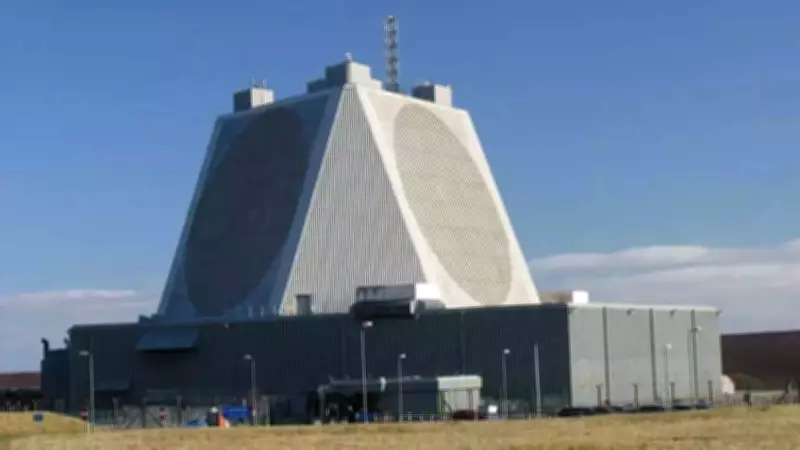
The AN/FPS-132 (Block 5) ballistic missile early-warning radar system, operated by the US Space Force in Qatar and allegedly hit by a suicide drone, is the largest radar the US operates in West Asia. With an impressive detection range of 5,000 kilometers, its loss is a major blow. The US maintains similar radar systems at only three domestic sites, with additional deployments in the United Kingdom and Greenland, highlighting the strategic importance of the Qatar installation.
In addition to radar systems, Iran has reportedly targeted satellite communication (SATCOM) terminals at the US Navy's 5th Fleet headquarters in Bahrain. Two AN/GSC-52B terminals and associated buildings, valued at approximately $20 million, were compromised. Initial assessments indicate that within the first few days of the conflict, the United States suffered nearly $2 billion in losses of military equipment across the region.
These developments underscore a calculated Iranian strategy to blindside US defensive capabilities by dismantling key surveillance and communication networks. The destruction of such advanced systems not only weakens immediate missile defenses but also complicates broader US military operations and intelligence gathering in the volatile Gulf area.