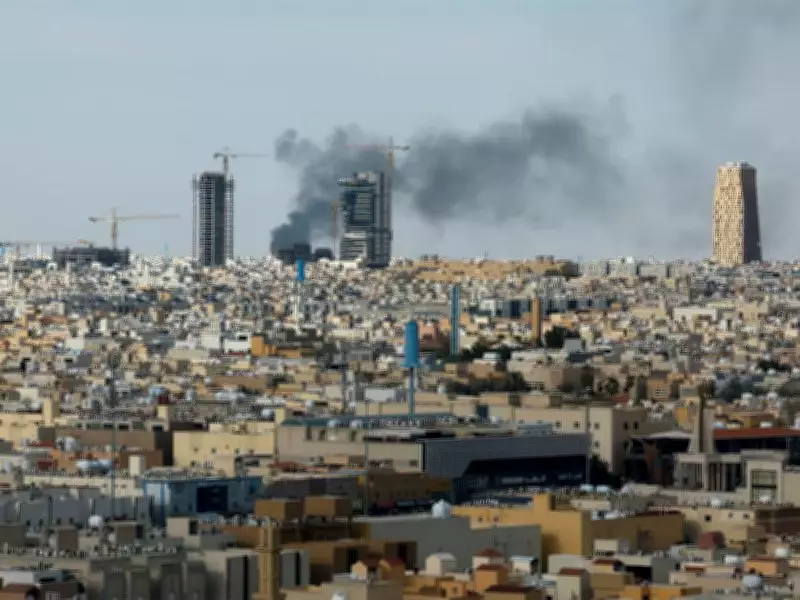
Iran Launches Coordinated Strikes on Four US Airbases
In a significant escalation of regional hostilities, Iran's Islamic Revolutionary Guard Corps (IRGC) and its naval forces executed coordinated missile and drone strikes on four United States airbases at dawn on Sunday, local time. According to reports from Al Jazeera, the attacks targeted critical military infrastructure, including command centers, air traffic control towers, and air defense facilities linked to US forces in the region.
IRGC Claims Extensive Damage from Precision Assaults
The IRGC issued a statement detailing the operation, describing it as a series of "precise and crushing blows" delivered by assault battalions. The force asserted that satellite imagery revealed extensive damage, with over 80 percent of strategic radars and vital points at the targeted bases destroyed. This marks a bold move by Iran, directly challenging US military presence and capabilities in the area.
Israeli Airstrikes Intensify in Southern Lebanon
Simultaneously, tensions flared on another front as Israeli warplanes carried out a series of strikes in southern Lebanon. Lebanon's National News Agency reported that Israeli aircraft launched "violent raids" targeting the town of Zibdin in the Nabatieh district on Sunday evening. Additional strikes were noted in the towns of Hanin, Kfar, Aita al-Shaab, and Yater, further destabilizing the region.

IDF Links Synagogue Attacker to Hezbollah Commander
The Israel Defence Forces (IDF) provided context for the raids, claiming intelligence findings connected the brother of a man behind a recent synagogue attack in Michigan to Hezbollah. In a post on X, the IDF identified Ibrahim Muhammad Ghazali as a commander in Hezbollah's Badr Unit, responsible for weapons operations and launching hundreds of rockets toward Israeli civilian areas. Ghazali was reportedly killed in an Israeli airstrike last week, with the IDF alleging his brother, Ayman Muhammad Ghazali, carried out the Michigan attack.
These developments underscore a volatile period in Middle Eastern geopolitics, with Iran and Israel taking aggressive actions that risk broader conflict. The strikes on US bases represent a direct confrontation with American forces, while the Israeli raids in Lebanon highlight ongoing proxy tensions with Hezbollah. Observers warn that such escalations could have far-reaching implications for regional stability and international security.