

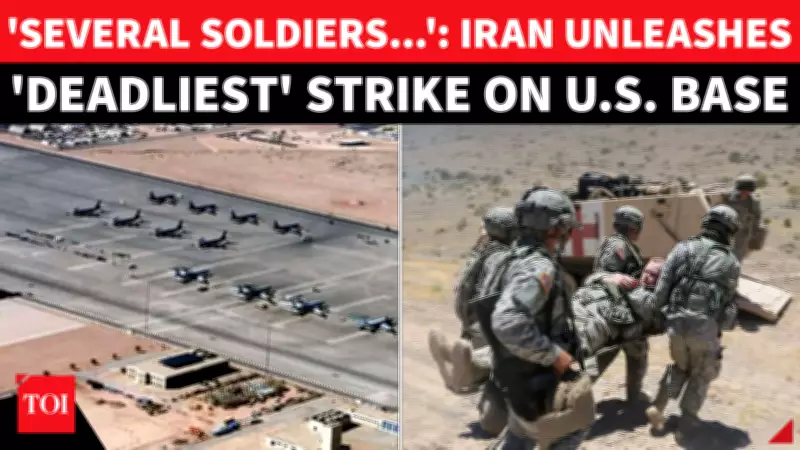
Iran Escalates Conflict with Major Strike on US Military Base in Saudi Arabia
In a significant escalation of hostilities in the Middle East, Iran has conducted a coordinated missile and drone assault on the Prince Sultan Air Base in Saudi Arabia, a key facility hosting United States military forces. The attack resulted in at least 12 American soldiers sustaining injuries, with two reported to be in serious condition, and caused substantial damage to critical aerial assets, including refueling and surveillance aircraft.
Details of the Attack and Its Impact
The strike, which occurred recently, involved a combination of precision missiles and unmanned aerial vehicles targeting the core infrastructure of the base. According to statements from Iran's Islamic Revolutionary Guard Corps (IRGC), the assault successfully penetrated the base's defensive systems, directly hitting operational areas central to U.S. aerial refueling missions. This has led to significant impairment of logistical capabilities and aircraft functionality.
Key outcomes of the attack include:

- Casualties: Twelve U.S. military personnel were wounded, with two in critical condition, highlighting the human toll of the conflict.
- Material Damage: Refueling aircraft and AWACS (Airborne Warning and Control System) surveillance planes were damaged, potentially disrupting U.S. air operations in the region.
- Strategic Breach: The IRGC claims the strike compromised base defenses, raising alarms about the vulnerability of American military installations.
Broader Implications for Regional Security
This incident marks a sharp intensification in the ongoing tensions between Iran and the United States, with Saudi Arabia caught in the crossfire. The targeting of Prince Sultan Air Base, a strategic hub for U.S. military activities, underscores Iran's willingness to directly challenge American presence in the Middle East. Analysts warn that such actions could precipitate a broader regional confrontation, as retaliatory measures and further escalations become more likely.
The attack has sparked concerns among international observers about the stability of key military hubs and the potential for an expanded conflict zone. With both sides demonstrating increased military posturing, the situation remains volatile, and diplomatic efforts to de-escalate are under strain.
This development follows a series of recent provocations and counter-strikes in the region, contributing to a deteriorating security environment. The involvement of advanced weaponry like drones and missiles in this attack points to Iran's evolving military capabilities and its intent to project power beyond its borders.






