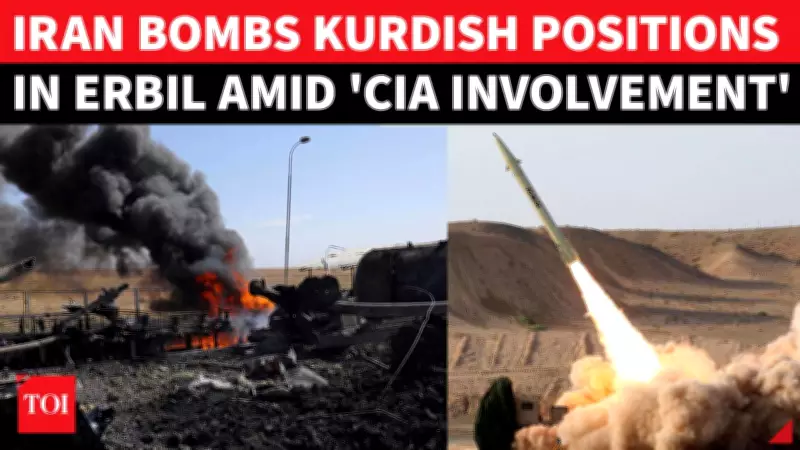
Iran Launches Major Missile and Drone Assault on Kurdish Bases in Northern Iraq
In a significant escalation of regional hostilities, Iran has executed a coordinated missile and drone strike targeting Kurdish opposition bases located near Erbil, within Iraq's autonomous Kurdistan Region. This aggressive military action, confirmed by Iranian state media and military statements, has ignited immediate concerns that the ongoing Middle East conflict could be expanding into a new and volatile front. The precision of the attack underscores Tehran's readiness to project force beyond its borders in pursuit of its strategic objectives.
Targets Alleged to Have U.S. Intelligence Backing
Iranian authorities have explicitly identified the targeted camps as belonging to separatist Kurdish groups, which they accuse of orchestrating and planning attacks inside Iranian territory. Furthermore, Tehran has leveled serious allegations that these factions receive covert support and backing from United States intelligence agencies, framing the strikes as a necessary defensive measure against foreign-sponsored aggression. This accusation adds a layer of geopolitical complexity, directly implicating U.S. involvement in the regional power struggle.
Visual evidence emerging from the region vividly captures the aftermath of the assault, with plumes of thick smoke billowing over the outskirts of Erbil, a clear testament to the intensity and destructive power of the Iranian offensive. The strikes have not only caused material damage but have also heightened security anxieties among local populations and international observers monitoring the situation.

Potential for Widening Conflict in the Middle East
The timing and scale of these attacks are particularly alarming, as they occur against a backdrop of already heightened tensions across the Middle East. Analysts warn that such cross-border military actions risk drawing Iraq more deeply into the regional fray and could provoke retaliatory measures, potentially spiraling into a broader confrontation. The involvement of the Islamic Revolutionary Guard Corps (IRGC) in raining fire on Erbil signals Iran's commitment to using its military capabilities to address perceived threats, regardless of international borders.
This development follows a series of recent escalatory statements and actions from various actors in the region, including heated rhetoric from Iranian diplomats and military officials. The strikes on Kurdish bases near Erbil may represent a calculated move by Iran to assert its influence and deter opposition, while simultaneously testing the responses of neighboring states and global powers like the United States.
Immediate Regional Reactions and Future ImplicationsAs smoke clears over Erbil, the international community is closely watching for reactions from the Iraqi government, Kurdish regional authorities, and key global stakeholders. The potential for these strikes to ignite further violence or diplomatic crises cannot be understated, with implications for regional stability, security arrangements, and the ongoing geopolitical chessboard in the Middle East. The situation remains fluid, with all eyes on how this aggressive Iranian maneuver will reshape the conflict dynamics in one of the world's most volatile regions.