

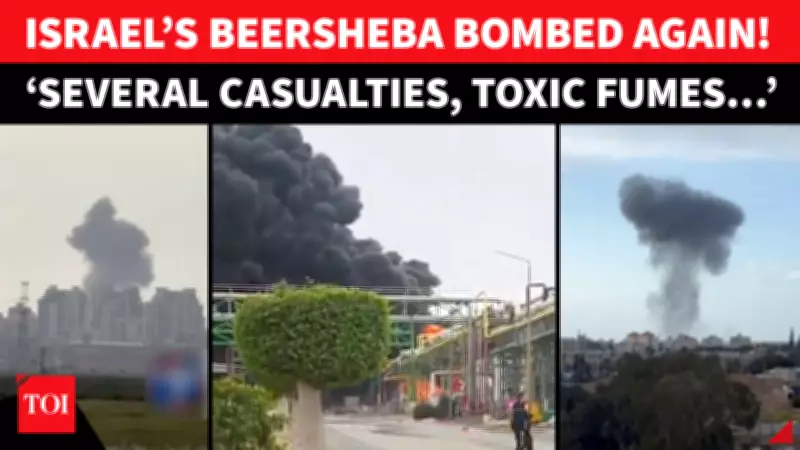
Iran Launches Consecutive Missile Strikes Against Israeli City of Beersheba
In a significant escalation of regional tensions, Iran has executed back-to-back missile strikes targeting the southern Israeli city of Beersheba. The attacks, which occurred in the industrial zone, resulted in a major fire at a chemical facility and multiple casualties.
Industrial Zone Targeted, Pesticide Tanks Ignited
According to reports from the IRGC-linked Fars news agency, Iranian missiles precisely struck the industrial area south of Beersheba. The impact ignited pesticide storage tanks, creating intense fires that sent thick columns of black smoke billowing into the sky. The explosions were powerful enough to cause temporary blackouts in surrounding areas, disrupting normal life and emergency response efforts.
Casualty Figures and Medical Response
The missile attacks resulted in at least 11 people sustaining minor injuries from shrapnel and blast effects. Medical authorities reported that an additional 20 individuals sought treatment for anxiety and psychological distress caused by the sudden explosions and ensuing chaos. Emergency services were mobilized to treat the wounded and secure the affected industrial zone.

Simultaneous Explosions Reported in Tehran
While Beersheba was under attack, explosions were also reported in northern districts of Tehran, Iran's capital. In a separate incident, a missile struck the office of Al Araby Television, abruptly halting live broadcasts and causing substantial structural damage to the media facility. These developments suggest a complex and rapidly evolving conflict situation with multiple fronts.
Regional Context and Escalating Tensions
These strikes represent a continuation of hostilities between Iran and Israel, following previous confrontations in the region. The targeting of industrial infrastructure, particularly chemical facilities, raises concerns about potential environmental hazards and long-term economic impacts. The attacks on media organizations further complicate the information landscape during this crisis.
Security analysts note that the precision of these strikes indicates sophisticated targeting capabilities, while the timing suggests coordinated military planning. The international community is closely monitoring the situation as fears grow about broader regional escalation and the potential for further retaliatory actions.






