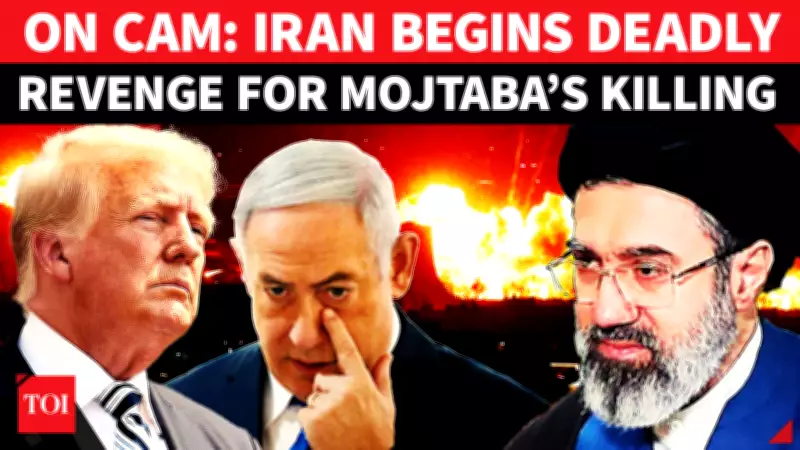
Iran Unleashes Retaliatory Strikes After Infant's Death, Targeting Israel and US Base
In a dramatic escalation of hostilities, Iran has launched a powerful new wave of precision missile and drone strikes against key sites in Israel and a major United States military base. The Islamic Revolutionary Guard Corps (IRGC) has explicitly stated that this offensive is a direct retaliation for the killing of four-day-old Mojtaba, who died in his mother's arms during a reported US-Israeli attack earlier this week.
Trigger for the Escalation: The Death of Infant Mojtaba
The immediate catalyst for this severe military response was the tragic death of the newborn, Mojtaba. Iranian authorities claim that the infant was killed in an attack orchestrated by US and Israeli forces, an allegation that has fueled widespread outrage and calls for vengeance. The IRGC, in its official statement, emphasized that "the blood of this innocent child will not go unanswered," framing the strikes as a necessary act of justice and deterrence.
This incident has not only intensified existing tensions but has also introduced a highly emotional and symbolic element into the conflict, potentially galvanizing support for further military actions.

Scope and Targets of the Iranian Offensive
The retaliatory strikes were meticulously planned and executed, focusing on multiple high-value targets:
- Key Israeli Sites: Precision missiles and drones were deployed against strategic locations within Israel, including military installations and infrastructure believed to be involved in the earlier attack.
- Major US Base: A significant US military facility in the region was also targeted, marking a direct confrontation with American forces and escalating the conflict beyond the Israeli-Iranian dynamic.
- Technological Warfare: The use of advanced drones and missiles underscores Iran's growing capabilities in asymmetric warfare, posing a substantial threat to regional stability.
These coordinated attacks represent a significant uptick in Iran's military posture, signaling a willingness to engage in direct strikes rather than relying solely on proxy forces.
Regional Implications and Fears of a Wider Conflict
The latest developments have sent shockwaves across the Middle East, with analysts and officials expressing grave concerns about the potential for a broader regional war. The involvement of the United States, through the targeting of its base, adds a critical international dimension to the crisis.
Key factors contributing to the heightened tensions include:
- Historical Antagonisms: Long-standing animosities between Iran, Israel, and the US have created a volatile environment where any incident can trigger disproportionate responses.
- Proxy Warfare Dynamics: Iran's support for groups like Hezbollah and the Houthis means that conflicts can quickly spread to other theaters, such as Lebanon or Yemen.
- Global Economic Concerns: The Strait of Hormuz, a vital oil shipping lane, could become a flashpoint, disrupting global energy supplies and exacerbating economic instability.
As retaliatory actions and counter-strikes loom, the risk of a full-scale confrontation involving multiple state and non-state actors is increasingly palpable. Diplomatic efforts to de-escalate the situation are urgently needed but face significant challenges amid the current climate of mutual distrust and aggression.
Looking Ahead: Potential Scenarios and Outcomes
The trajectory of this conflict remains highly uncertain, with several possible outcomes on the horizon:

- Contained Escalation: The strikes could remain limited, with both sides avoiding further major offensives to prevent all-out war.
- Expanded Conflict: If retaliation continues, the conflict could engulf neighboring countries and draw in other global powers, leading to a regional war.
- Diplomatic Intervention: International mediators might step in to broker a ceasefire, though past attempts have often been undermined by deep-seated geopolitical rivalries.
The death of infant Mojtaba has undoubtedly added a poignant and tragic layer to an already complex geopolitical landscape, making resolution even more difficult. As the world watches closely, the coming days will be crucial in determining whether this escalation can be contained or if it marks the beginning of a more extensive and devastating conflict in the Middle East.