

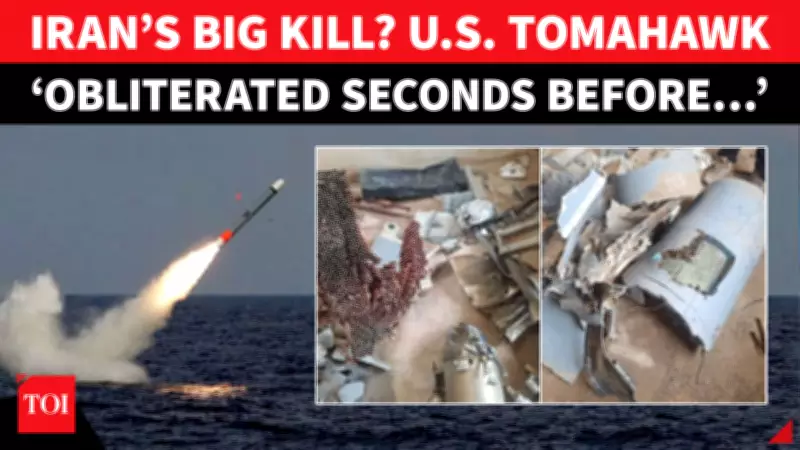
Iran Claims Major Defense Victory, Shoots Down US Tomahawk Cruise Missile
In a dramatic escalation of military tensions, Iranian officials have reported a significant defensive achievement on March 27, 2026. According to a report from Press TV, Iran's state-affiliated media outlet, the country's air defense systems successfully intercepted and shot down a prized US Tomahawk cruise missile before it could reach its intended target within Iranian territory.
Details of the Interception Incident
The incident occurred in the skies over Iran, marking what appears to be a direct hit on one of America's most advanced long-range weapons systems. The Tomahawk cruise missile, known for its precision and stealth capabilities, represents a cornerstone of US military power projection. Iranian authorities described the interception as a "direct hit" by their defensive network, though independent verification from international observers or the United States government has not yet been provided.
This event is not isolated, as Iranian reports indicate multiple recent incidents involving military engagements. The successful downing of the Tomahawk missile underscores Iran's growing confidence in its air defense capabilities, which have been significantly upgraded in recent years amid ongoing regional conflicts and international sanctions.

Broader Context of Regional Tensions
The interception comes against a backdrop of heightened hostilities in the Middle East. Recent reports have highlighted a series of aggressive actions and warnings from various actors in the region:
- Iran has reportedly conducted missile strikes on Saudi Arabia's capital, Riyadh, following political pressures involving former US President Donald Trump.
- Russia has confirmed arms supplies to the Iranian army, with statements suggesting knowledge of American base locations.
- The US has allegedly deployed new weapons, referred to as "Gators," to counter Iran's secret missile facilities.
- Apocalyptic scenes have been described in Kuwait, with Iran punishing US allies through attacks on key port infrastructure.
Additionally, the Islamic Revolutionary Guard Corps (IRGC) has issued warnings to Gulf residents to stay away from American personnel, while hardliners in Iran are pushing for the development of nuclear weapons, causing concern in international circles. The United Arab Emirates is considering joining US and Israel in potential strikes against Iran, with naval deployments planned for the strategic Strait of Hormuz.
Implications and International Reactions
The downing of the Tomahawk missile represents a potential humiliation for the United States, as it challenges the perceived invincibility of its military technology. This incident could embolden Iran and its allies, while prompting a reassessment of US strategy in the region. Political figures like Marco Rubio have called on NATO allies to support efforts to reopen the Strait of Hormuz, which Iran has threatened to block.
Meanwhile, the Israeli military has expressed concerns about its capabilities amid mounting Iranian attacks, adding another layer of complexity to the volatile situation. As tensions continue to rise, the international community watches closely, with fears of a broader conflict that could involve multiple nations and have devastating consequences for global stability.
This development highlights the ongoing power struggles in the Middle East, where military posturing and defensive achievements play a critical role in shaping geopolitical dynamics. The full ramifications of Iran's claimed interception will likely unfold in the coming days, as more details emerge and official responses are issued by involved parties.






