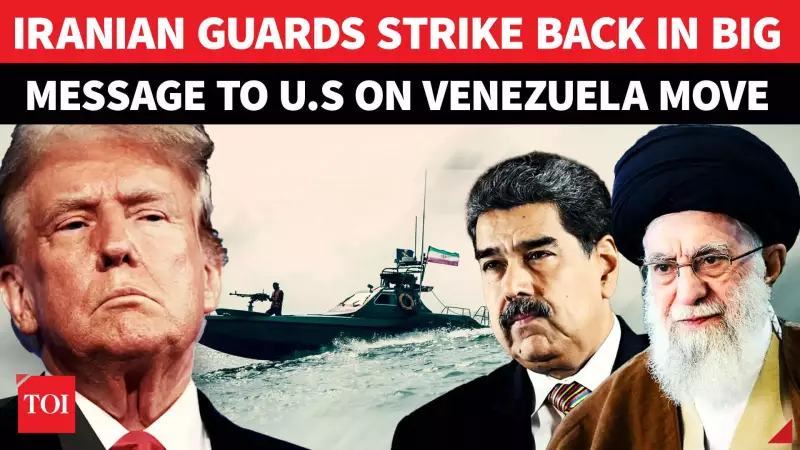
In a dramatic escalation of maritime tensions, Iran's Revolutionary Guard Corps has forcibly boarded and seized a foreign-crewed oil tanker in the strategic waters of the Persian Gulf. The incident, confirmed on December 25, 2025, is widely viewed as a direct retaliatory move following a recent U.S. seizure of an Iranian tanker near the coast of Venezuela.
A Tit-for-Tat Move in Global Shipping Lanes
The interception by Iranian forces comes amidst intense pressure from Washington. Just days earlier, the United States had captured a tanker carrying Iranian and Venezuelan oil in the Caribbean Sea. While Tehran officially labels its action as a standard anti-smuggling operation, the timing and nature of the seizure have sent alarm bells ringing across international corridors of power and trade.
Analysts point out that this is not an isolated law enforcement action but a clear geopolitical gambit. The seizure represents a dangerous game of tit-for-tat, where naval and military enforcement is increasingly overlapping with broader strategic confrontations. The message from Iran appears to be one of demonstrated capability and a warning against further seizures of its assets.

The Strait of Hormuz: A Global Chokepoint Under Threat
The location of the incident amplifies its global significance. The Persian Gulf, and specifically the Strait of Hormuz, serves as one of the world's most critical energy arteries. A significant portion of globally traded oil and liquefied natural gas passes through this narrow waterway. Any sustained instability or military posturing here has immediate repercussions for energy security and prices worldwide.
This latest confrontation underscores how geopolitical rivalries are playing out directly on these vital sea lanes. The collision of international sanctions, sovereign claims, and control over oil routes creates a volatile mix. Energy markets, already sensitive to regional disruptions, are watching these developments with heightened anxiety, fearing potential supply shocks.
Broader Implications for Trade and Diplomacy
The repercussions of this incident extend far beyond the immediate region. It highlights the growing risk of miscalculation and accidental conflict in congested international waters. The involvement of foreign crew members on the seized vessel adds another layer of diplomatic complexity, potentially drawing other nations into the dispute.
Furthermore, the event signals a hardening of positions. With the U.S. enforcing sanctions through naval power and Iran responding in kind, the space for diplomatic resolution appears to be shrinking. The cycle of action and retaliation threatens to establish a dangerous new normal in maritime security, where commercial shipping becomes a pawn in larger political struggles.
As of now, global trade and energy markets remain on a knife's edge. The coming days will be crucial in determining whether this incident marks a temporary spike in tensions or the beginning of a more sustained and disruptive campaign in the world's most important shipping lanes.