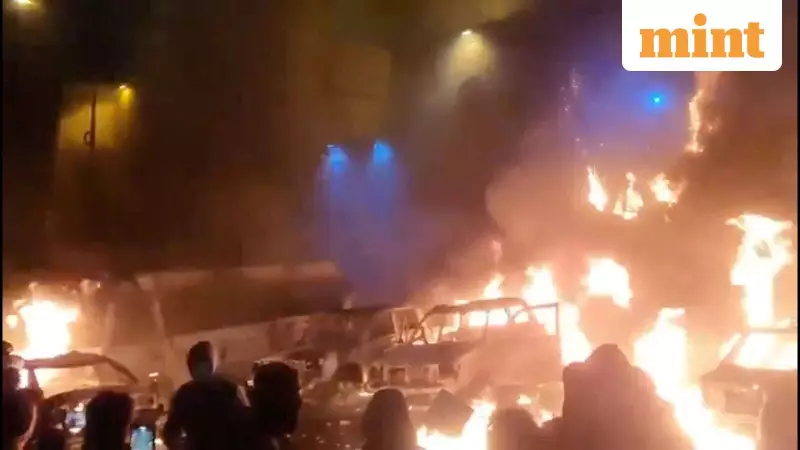
Iran was gripped by a fresh wave of intense protests on Friday, marked by a severe internet blackout and the suspension of telephone services. The demonstrations, among the largest seen in the country in three years, gained momentum following a public call to action from the exiled Crown Prince Reza Pahlavi.
Streets Echo with Anti-Regime Chants
According to an Associated Press report, the streets of the capital, Tehran, resonated with chants demanding the death of the country's Supreme Leader, Syed Ali Hosseini Khamenei. In a significant show of support for the former monarchy, many protesters were also heard calling for the return of Reza Pahlavi, the son of the last Shah of Iran.
The authorities responded with a widespread communications crackdown, severely limiting internet access and phone services in an apparent attempt to stifle the spread of information and coordination among demonstrators.

Economic Grievances Spark Widespread Unrest
The current wave of dissent has its roots in economic hardship. It first erupted on 28 December, 2025, within Tehran's historic Grand Bazaar. Shopkeepers and merchants initiated the protests, voicing their anger against the nation's struggling economy and the precipitous free fall of the Iranian currency.
What began as a localized demonstration over financial woes has rapidly transformed into a broader anti-government movement, drawing in citizens from various segments of society frustrated with the political establishment.
Mounting Human Cost of the Crackdown
The human rights situation has deteriorated sharply since the protests began. Data from the US-based Human Rights Activists News Agency paints a grim picture of the state response. At least 42 people have lost their lives in the unrest, while security forces have detained over 2,200 individuals.
The combination of lethal force, mass arrests, and the digital blockade underscores the severe challenges faced by the protest movement and the government's determination to suppress it. This represents the most significant challenge to Iran's leadership since the major protest waves three years prior.