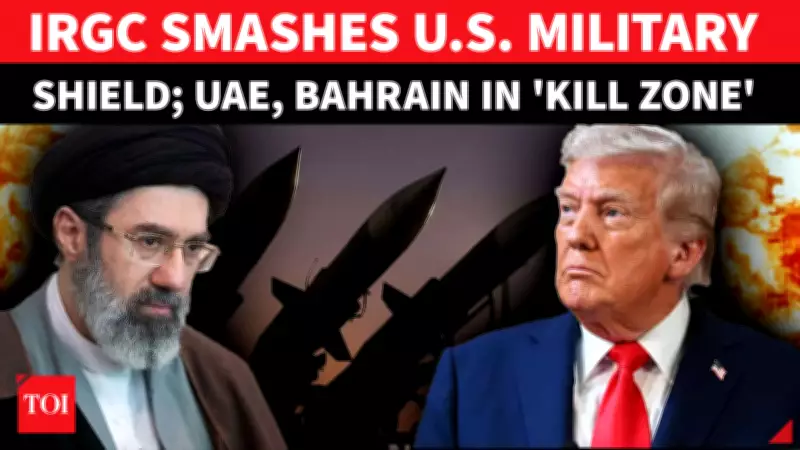
Iran Unleashes Major Missile and Drone Assault on Gulf Nations
A significant escalation of hostilities has erupted in the Gulf region as Iran launched a fresh wave of attacks targeting the United Arab Emirates and Bahrain. The UAE successfully intercepted 42 drones and 16 ballistic missiles in this latest offensive, demonstrating the intense pressure on regional air defense systems.
Relentless Pressure on Gulf Defenses
Bahrain has reported intercepting hundreds of missiles and drones since the conflict began, highlighting the continuous and overwhelming nature of these assaults. The repeated attacks are rapidly transforming the Gulf into a critical frontline in the expanding regional confrontation, with defense systems facing unprecedented challenges.
Economic Targets in the Crosshairs
Iran's Islamic Revolutionary Guard Corps (IRGC) has claimed responsibility for targeting key industrial facilities in both countries. According to their statements, the strikes focused on major aluminum plants that are integral to global supply chains. While the exact extent of damage remains unverified, this shift toward economic targets represents a dangerous escalation in strategy.

The targeting of industrial infrastructure suggests Iran is attempting to inflict economic pain beyond immediate military objectives. These facilities play crucial roles in international trade and manufacturing networks, meaning any significant damage could have ripple effects across global markets.
Regional Conflict Intensifies
With each successive wave of attacks growing in intensity and sophistication, the Gulf region finds itself at the center of a rapidly evolving conflict. The ability of UAE and Bahrain to intercept such large numbers of projectiles demonstrates their defensive capabilities, but also underscores the relentless nature of the threat they face.
This escalation comes amid broader regional tensions that have been building for months. The persistent attacks suggest Iran is testing the limits of Gulf defenses while simultaneously sending a clear message about its military capabilities and willingness to engage in prolonged conflict.
The situation remains fluid, with international observers closely monitoring developments. The targeting of economic infrastructure represents a concerning development that could have lasting implications for regional stability and global economic interests connected to the Gulf.