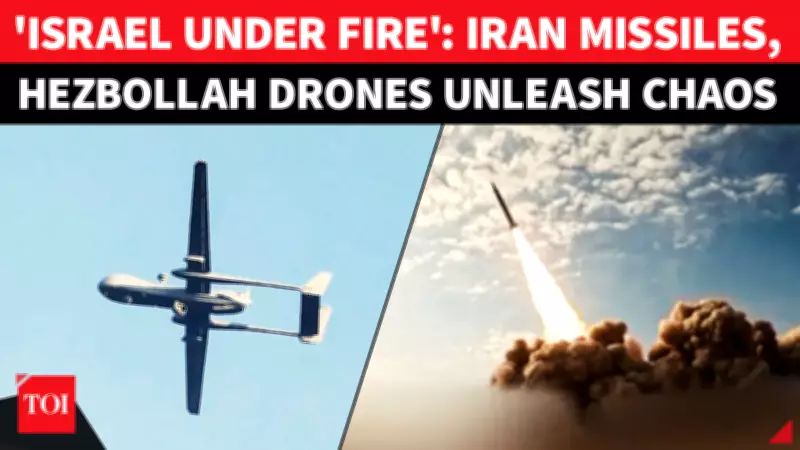
Iran and Hezbollah Launch Coordinated Attacks on Israel, Triggering Mass Panic
Tensions in the Middle East have dramatically escalated as Iran launched a barrage of ballistic missiles targeting southern Israeli communities, while simultaneously, Hezbollah militants swarmed northern border towns with a wave of explosive drones. This dual-front assault has plunged Israel into a state of high alert, with air raid sirens blaring across the country and residents frantically scrambling to seek shelter in fortified safe rooms and public bunkers.
Widespread Panic and Civilian Response
The sudden and coordinated nature of the attacks triggered mass panic among Israeli civilians, who were caught off guard by the intensity of the offensive. In southern regions, communities near the Gaza border reported direct impacts from Iranian missiles, causing significant damage to infrastructure and heightening fears of casualties. Meanwhile, in the north, the relentless drone swarms from Hezbollah created a chaotic atmosphere, with many families spending hours in shelters as the Israel Defense Forces worked tirelessly to intercept incoming threats.
The Israel Defense Forces have been on high alert, deploying advanced missile defense systems like the Iron Dome and Arrow to counter the aerial assaults. Military spokespersons confirmed that numerous projectiles were successfully intercepted, but some managed to penetrate defenses, leading to localized destruction. The psychological toll on civilians has been immense, with many expressing anxiety over the unpredictable nature of the conflict.

Israel's Swift Retaliation and Regional Implications
In a swift and decisive response, Israel reportedly conducted retaliatory strikes on Iranian regime positions within Tehran itself, signaling a bold escalation in the ongoing shadow war between the two nations. This counterattack underscores Israel's policy of immediate retaliation against direct threats, potentially risking a broader regional conflict. The exchange of fire marks one of the most intense periods of hostilities in recent months, exacerbating the already volatile security situation in the Middle East.
Analysts warn that this escalation could draw in other regional actors, further destabilizing an area already grappling with proxy wars and geopolitical rivalries. The involvement of Hezbollah, a Lebanese militant group backed by Iran, highlights the complex network of alliances and enmities that define the region's conflict dynamics.
Ongoing Threats and Civilian Advisory
Israeli authorities have issued urgent advisories, urging civilians to remain vigilant and stay close to protected spaces as the situation continues to unfold unpredictably. Emergency services are on standby, and hospitals have been placed on high alert to handle potential casualties from the attacks. The government has emphasized the importance of following official instructions to ensure public safety during this crisis.
The recent events underscore the growing instability in the Middle East, with tensions between Iran and Israel reaching a new peak. As both sides assess the damage and plan their next moves, the international community watches closely, concerned about the potential for further escalation into a full-scale war. The dual-front assault serves as a stark reminder of the fragile peace in the region and the ever-present threat of conflict.