Iranian Missile Attack Targets Jerusalem Highway, Injuring Seven Civilians
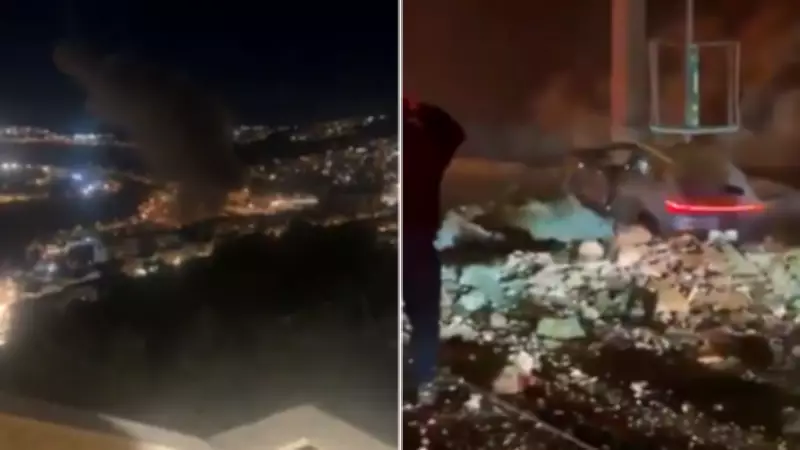
Dramatic video footage circulating widely on social media platforms captured the precise moment an Iranian ballistic missile struck a major highway in the Jerusalem area late on Sunday evening. The attack resulted in seven individuals sustaining injuries of varying severity and left a scene of significant destruction, with debris scattered extensively across the roadway.
Emergency Response and Scene of Destruction
According to an official statement from Israel's national fire service, Jerusalem District firefighters were immediately dispatched to respond to an impact site located on a highway within the Jerusalem region. The statement further confirmed that, based on information from medical authorities, seven injured people had been evacuated from the site to receive urgent medical treatment.
Israel's primary emergency medical service, Magen David Adom, provided detailed casualty figures. They reported treating one man in his 50s who was in moderate condition, alongside five other individuals who sustained light injuries. Medical teams were rapidly deployed following initial reports of a ballistic missile impact on a road near the city.

Footage from the aftermath reveals a large, deep crater gouged into the highway tarmac, a severely damaged vehicle nearby, and rubble strewn across multiple traffic lanes, indicating the force of the explosion.
Military Confirmation and Defensive Actions
A series of loud explosions were heard resonating over Jerusalem shortly after the Israeli military's detection systems identified missiles launched from Iranian territory toward Israel. The Israel Defense Forces issued a statement confirming, "A short while ago, the IDF identified missiles launched from Iran toward the territory of the State of Israel," and noted that "defensive systems are operating to intercept the threat."
Israeli police confirmed that officers were conducting extensive searches across the district following reports of projectile fragments and interceptor debris falling in several locations. Strict military censorship rules prevented media outlets from disclosing the exact sites of impact, a standard procedure during such security incidents.
Escalating Regional Conflict and Political Statements
This direct missile strike occurs amid a rapidly intensifying and multifaceted conflict involving Israel, the United States, and Iran. The attack follows a pattern of escalating hostilities in the region.
In related developments, US President Donald Trump commented on the campaign against Tehran, suggesting it could persist for up to four weeks. He described the process as "always been a four-week process" in remarks provided to the Daily Mail. Concurrently, Israeli Prime Minister Benjamin Netanyahu stated that air strikes targeting Tehran would likely escalate in the coming days, signaling a potential increase in military operations.
The broader regional context includes reports of explosions in Gulf cities such as Dubai, Doha, and Manama, with airports being targeted, further highlighting the widening scope of the conflict. The United Arab Emirates has publicly urged Iran to "go back to your senses" following attacks on Dubai, Abu Dhabi, Doha, and Kuwait, underscoring the diplomatic tensions.
This incident represents a significant escalation, marking a direct Iranian missile strike on Israeli territory near Jerusalem, a city of profound religious and political significance. The event underscores the volatile and dangerous state of affairs in the Middle East, with the potential for further military engagements and diplomatic fallout in the near future.