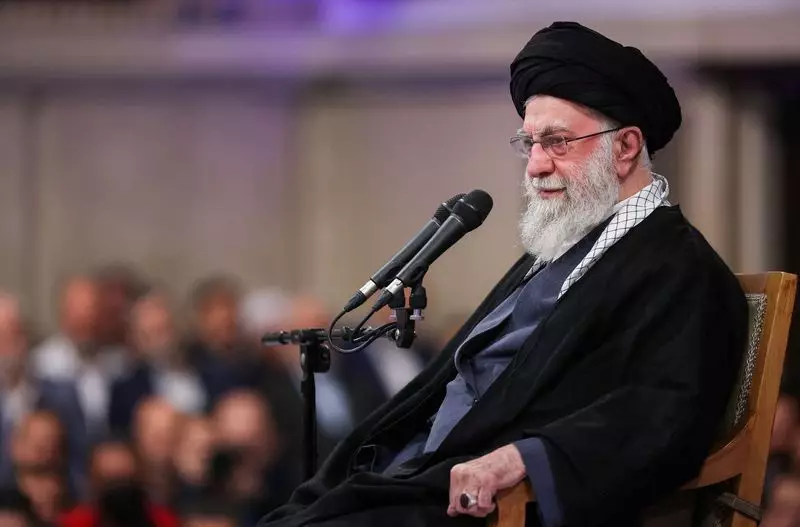
Iran's Supreme Leader, Ayatollah Ali Khamenei, has issued a stern warning against those participating in ongoing nationwide protests, stating that rioters must be decisively put in their place. This declaration comes as the official death toll from the unrest climbed to at least 10 people, according to state media reports.
Khamenei's Strong Condemnation of Protesters
In his first public comments addressing the recent wave of demonstrations, the Supreme Leader strongly backed the government's security forces. He characterized the violent elements within the protests as "tools of the enemy" who were acting against the nation's interests. Ayatollah Khamenei emphasized that creating insecurity in the country is the "worst crime" and accused foreign powers, without naming specific countries, of orchestrating the chaos.
The protests, which erupted on May 19th, were initially triggered by public outrage over a tragic building collapse in the southwestern city of Abadan. The incident, which killed at least 37 people, sparked immediate anger against local authorities, who were blamed for corruption and negligence. This grief and fury quickly spiraled into broader anti-government rallies across multiple provinces, including Tehran, Isfahan, and Khuzestan.

Escalating Violence and Official Response
As demonstrations spread, they turned increasingly violent. State television reported that at least 10 individuals have been killed in the clashes between protesters and security personnel. Officials claim that an undisclosed number of security force members were also injured during the operations to restore order.
In response, Iranian authorities have moved aggressively to quell the dissent. Internet monitoring groups reported significant disruptions and slowdowns in online access, a common tactic used by the government during periods of civil unrest to hinder organization and the spread of information. Security forces have been deployed in strength across protest hotspots.
Broader Context and International Scrutiny
This latest episode of civil unrest occurs against a backdrop of severe economic pressure on Iran, primarily due to stringent international sanctions. Public frustration over rising prices, unemployment, and perceived governmental mismanagement has been simmering for years, occasionally boiling over into the streets, as seen in major protests in 2019 and 2021.
The government's narrative, heavily promoted by state media, firmly places the blame on external adversaries. Officials consistently frame any domestic opposition as a plot engineered by foreign enemies, particularly the United States and Israel, aiming to destabilize the Islamic Republic. This framing is used to justify a harsh security response to any form of dissent.
International human rights organizations have expressed deep concern over the Iranian government's handling of the protests, calling for restraint and an independent investigation into the casualties. The situation remains tense, with Ayatollah Khamenei's latest remarks signaling no tolerance for further disruption and a clear intent to use all state power to end the demonstrations.