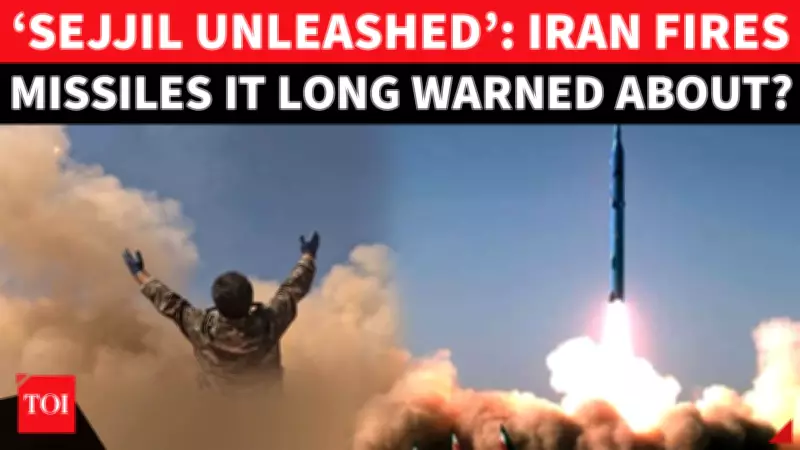
Iran Escalates Regional Conflict with First Sejjil Missile Launch
In a significant escalation of hostilities in the Middle East, Iran has reportedly launched its first Sejjil ballistic missiles as part of a new wave of attacks targeting Israeli-linked sites and United States military assets across the region. According to Iranian state media, these strikes constitute the 54th wave of operations in the ongoing conflict, directly responding to what Tehran claims are recent attacks on Iranian territory and civilian infrastructure.
Advanced Missile Capabilities Unveiled
The Sejjil missile represents a formidable advancement in Iran's military arsenal. As a solid-fuel medium-range ballistic missile, it boasts an estimated operational range of 2,000 to 2,500 kilometers. This capability allows Iran to potentially strike targets across the entire Middle East region, including key strategic locations in Israel and U.S. military facilities throughout the Gulf area.
Solid-fuel technology provides several tactical advantages:

- Faster launch preparation compared to liquid-fuel systems
- Enhanced mobility and reduced vulnerability to pre-emptive strikes
- Greater operational flexibility in conflict scenarios
Targeted Strikes and Regional Implications
Initial reports indicate that the Sejjil missile launches specifically targeted U.S. military installations in the Persian Gulf region and Israeli command locations. These strikes have raised immediate concerns among defense analysts about potential retaliation and further escalation in an already volatile geopolitical landscape.
The timing and nature of these attacks suggest a calculated move by Iranian military planners to demonstrate enhanced capabilities while responding to perceived provocations. The conflict has now entered a more dangerous phase with the introduction of these advanced missile systems into active combat operations.
International Response and Security Concerns
The deployment of Sejjil missiles has prompted urgent security assessments among U.S. and Israeli defense establishments. American military defenses in the region are reportedly evaluating their response protocols to this new threat, while Israeli security forces are reassessing their defensive posture against medium-range ballistic missile capabilities.
Regional stability faces increased pressure as these developments unfold. The broader implications extend beyond immediate military concerns to encompass:
- Potential disruption to international shipping lanes in strategic waterways
- Impact on global energy markets and oil transportation routes
- Heightened risks for diplomatic efforts to de-escalate regional tensions
As the situation continues to develop, international observers are closely monitoring Tehran's next moves and the corresponding responses from Washington and Jerusalem. The introduction of Sejjil missile technology into active conflict represents a significant milestone in Iran's military capabilities and a potential turning point in Middle Eastern security dynamics.