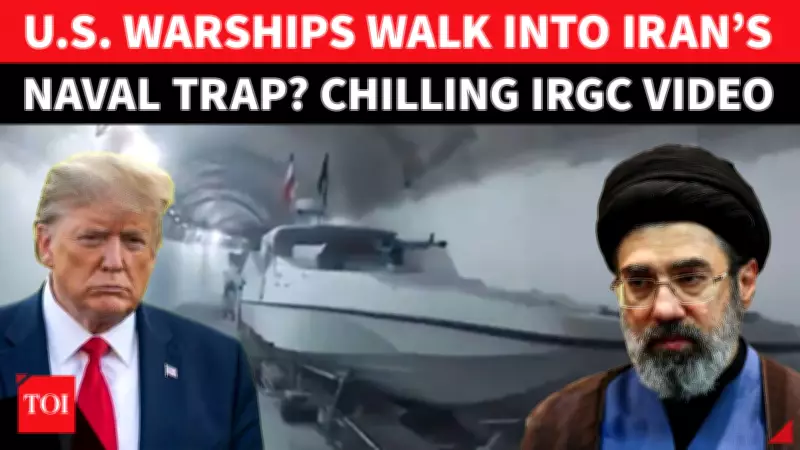
Iran's Revolutionary Guard Unveils Underground Naval Network Amid Escalating Strait of Hormuz Tensions
Tensions between Iran and the United States have intensified significantly as the strategic Strait of Hormuz becomes a focal point of military posturing. In a provocative move, the Islamic Revolutionary Guard Corps has resurfaced dramatic footage showcasing extensive underground naval tunnel networks. This video, originally released in 2025, has been re-released following fresh threats from former US President Donald Trump regarding the vital Gulf waterway.
Inside Iran's Subterranean Naval Arsenal
The newly released footage provides a rare glimpse into Iran's sophisticated underground military infrastructure. The tunnel networks are packed with numerous fast-attack boats, anti-ship missiles, and naval mines, all strategically positioned for rapid deployment. According to military analysts, these facilities are believed to house hundreds of advanced cruise missiles stored deep beneath the earth's surface, protected from aerial surveillance and potential attacks.
The Islamic Revolutionary Guard Corps operates these extensive tunnel systems, which form a crucial component of Iran's asymmetric naval strategy. This approach is specifically designed to challenge and counter the powerful naval fleets that regularly operate in the Strait of Hormuz, one of the world's most critical maritime chokepoints for global oil transportation.

Strategic Significance of the Strait of Hormuz
The timing of this video release is particularly significant, coming amid heightened rhetoric from former President Trump regarding Iranian naval capabilities in the region. The Strait of Hormuz serves as a vital passageway for approximately one-fifth of the world's petroleum products, making it a geopolitical flashpoint of immense importance. Iran's demonstration of its underground naval capabilities represents a clear message of military preparedness and deterrence.
Military experts note that these tunnel networks allow Iran to maintain a persistent threat to shipping lanes while protecting its assets from potential strikes. The facilities enable rapid deployment of naval assets that could potentially disrupt or block the strait, a capability that has long concerned Western powers and regional allies.
Broader Regional Context and Implications
This development occurs within a broader context of escalating regional tensions, as evidenced by recent reports of:
- Drone strikes on Dubai Airport allegedly involving Iranian technology
- Missile attacks targeting Israeli urban centers
- Strikes on American military installations in Iraq's Kurdistan region
- Espionage operations and counter-intelligence activities between Iran and Western powers
The resurfacing of this tunnel footage represents more than just military posturing—it signals Iran's commitment to maintaining its strategic advantages in the Persian Gulf region. As diplomatic channels remain strained and military rhetoric intensifies, the underground naval tunnels serve as both a practical military asset and a psychological weapon in the ongoing standoff between Iran and the United States.
Analysts warn that such demonstrations of military capability, combined with inflammatory rhetoric from both sides, increase the risk of miscalculation and accidental escalation in one of the world's most volatile regions. The situation continues to evolve as global powers monitor developments in the Strait of Hormuz with growing concern.