Iran's Revolutionary Guards Claim Retaliatory Strike on US Aircraft Carrier in Gulf
In a significant escalation of regional hostilities, Iran's Revolutionary Guards announced on Sunday that they had targeted the aircraft carrier USS Abraham Lincoln in the Gulf. This action was described as direct retaliation for coordinated United States and Israeli strikes that resulted in the death of Iran's Supreme Leader Ali Khamenei.
Details of the Alleged Attack and Military Buildup
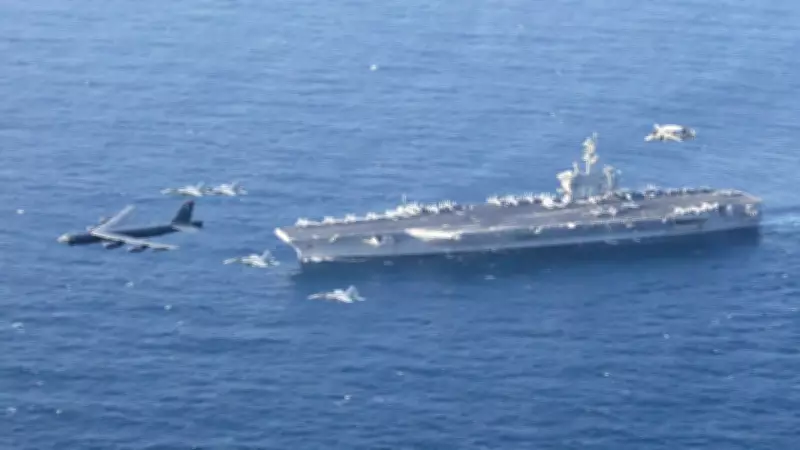
According to a statement from the Guards quoted by AFP, "The US aircraft carrier Abraham Lincoln was struck by four ballistic missiles." The statement further issued a stark warning, declaring that "the land and sea will increasingly become the graveyard of the terrorist aggressors." This claim comes amid a substantial US naval reinforcement in the region.
The USS Abraham Lincoln, accompanied by three guided-missile destroyers, arrived in January to bolster the US naval presence. This contingent was later joined by the USS Gerald R. Ford, the world's largest aircraft carrier, along with four additional destroyers redeployed from the Caribbean to the Middle East. Currently positioned in the Mediterranean, this expanded deployment has introduced over 10,000 additional US troops into the volatile region.

Background: The Killing of Ali Khamenei and Regional Fallout
The alleged attack on the USS Abraham Lincoln is part of a rapidly widening conflict triggered by a sweeping joint offensive by the United States and Israel. This operation successfully eliminated Iran's Supreme Leader Ali Khamenei, setting off a chain of retaliatory actions across the Middle East and sending shockwaves through the international community.
The escalation intensified on Sunday as Israel launched a major strike on Tehran. In response, Iran deployed drones and missiles, targeting not only Israel but also US military installations around the Gulf and even the commercial hub of Dubai. The conflict's ripple effects extended to Pakistan, where at least nine people were reported killed during unrest after protesters stormed the US consulate.
Global Concerns and Political Context
The coordinated strikes, which commenced on Saturday, have raised profound fears of a broader regional war with potentially severe consequences for global markets and energy supplies. In announcing the initial US-Israeli operation, President Donald Trump called on the Iranian people to seize the moment and "take over," framing the military action as an opportunity for political change within Iran.
This military assault unfolded just days after fresh nuclear talks between the US and Iran, during which Washington pressured Tehran to curb its atomic program. The strikes also occurred against a backdrop of mounting domestic discontent in Iran, where protests initially sparked by economic grievances have evolved into broader anti-government demonstrations.
The situation remains highly fluid, with the alleged attack on the USS Abraham Lincoln marking a dangerous new phase in the confrontation. The international community is closely monitoring developments, concerned about the potential for further escalation and its impact on regional stability and global security.