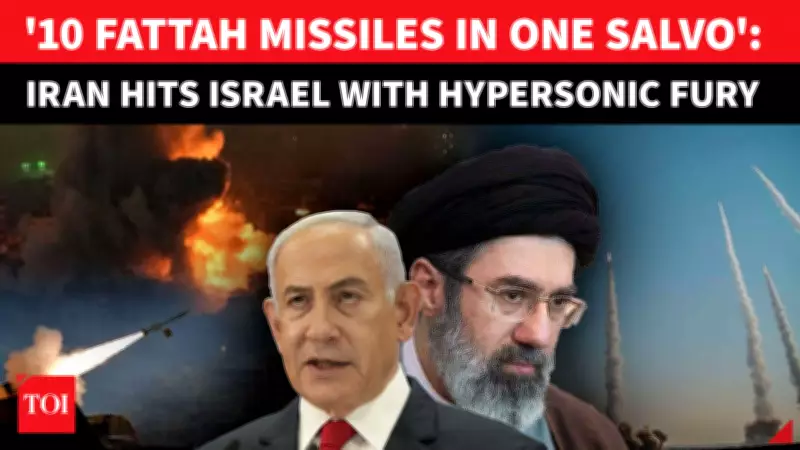
Iran Unleashes Hypersonic Missile Assault on Israeli and American Targets
In a significant escalation of regional hostilities, the Islamic Revolutionary Guard Corps (IRGC) of Iran announced on March 15, 2026, the successful execution of the 53rd wave of its Operation True Promise-4. This military action involved coordinated strikes against American and Israeli targets across the Middle East, marking a bold move by Tehran amid ongoing geopolitical tensions.
Advanced Weaponry Deployed in Precision Strikes
The IRGC, Iran's elite paramilitary force, detailed in an official statement that the attacks utilized a combination of cutting-edge weaponry. Specifically, the strikes featured the launch of 10 hypersonic missiles, including models from the Fattah and Qadr series, alongside explosive drones. Hypersonic missiles are known for their high speed and maneuverability, making them difficult to intercept with conventional defense systems.
Evidence from the ground emerged as footage shared online by Israeli police indicated that one of the missiles was armed with cluster munitions upon impact in Tel Aviv. Cluster munitions are controversial weapons that disperse smaller explosives over a wide area, potentially causing extensive damage and civilian casualties. This development underscores the severity of the attack and its potential humanitarian implications.

Context and Regional Implications
This missile barrage occurs against a backdrop of heightened tensions between Iran, Israel, and the United States. Recent months have seen a series of provocations and retaliatory actions, with Iran previously declaring the Persian Gulf off-limits to American ships and issuing stark warnings to regional adversaries. The use of hypersonic technology in this strike represents a technological leap in Iran's military capabilities, potentially altering the strategic balance in the region.
International observers are closely monitoring the situation, as such escalations could draw in other global powers and destabilize an already volatile area. The attack on Tel Aviv, a major urban center, highlights the direct threat posed to civilian populations and critical infrastructure.
Broader Impact and Future Outlook
The repercussions of this hypersonic missile launch are likely to be far-reaching. Key considerations include:
- Military Response: Israel and the United States may consider countermeasures, potentially leading to a cycle of retaliation.
- Diplomatic Fallout: This event could strain international relations and impact ongoing negotiations or peace efforts in the Middle East.
- Technological Arms Race: Iran's demonstration of hypersonic capabilities may prompt other nations to accelerate their own missile defense and offensive systems development.
As the situation unfolds, security analysts warn that further escalations could have catastrophic consequences for regional stability. The international community is urged to engage in dialogue to de-escalate tensions and prevent a full-scale conflict.