Iran Launches Cluster-Warhead Missile at Israel, Testing Air Defenses with Scattered Bomblets
In a significant escalation of hostilities, Iran fired a ballistic missile equipped with a cluster warhead at central Israel, resulting in two people sustaining light injuries. The attack occurred on March 15, 2026, with the missile releasing its payload high in the air, causing bomblets to rain down over a wide area. Israel's emergency service, Magen David Adom, confirmed the injuries as rescue teams responded to multiple sites affected by fires and damage.
Footage Reveals Impact of Cluster Munitions
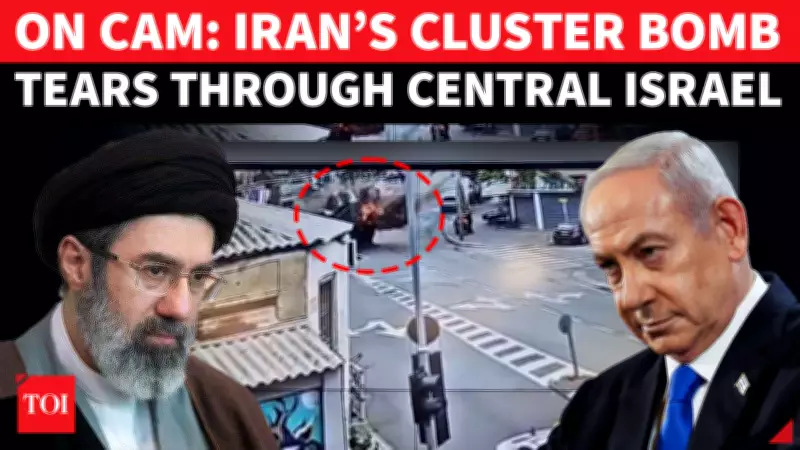
Israeli police released footage showing one of the bomblets striking the ground after the missile dispersed its submunitions. This visual evidence underscores the unpredictable nature of cluster munitions, which can spread over miles and pose severe risks to civilian populations. The incident marks a concerning development in the ongoing Iran-Israel conflict, as such weapons are designed to overwhelm traditional defense mechanisms.
Military Analysts Warn of Evolving Tactics
Military experts have noted that Iran has been increasingly equipping its missiles with cluster warheads to challenge Israel's advanced air defense systems, including the renowned Iron Dome. According to analysts, these submunitions create new interception challenges because they scatter widely, making it difficult for defense systems to neutralize all threats effectively. This tactic represents a strategic shift aimed at testing and potentially bypassing Israel's defensive capabilities.

The use of cluster munitions in this attack highlights the evolving nature of modern warfare, where adversaries adapt their arsenals to exploit vulnerabilities in defense networks. Experts warn that such weapons not only increase the risk to civilian areas but also complicate rescue and recovery efforts due to their widespread dispersal.
Context of Escalating Iran-Israel Tensions
This missile strike is part of a broader pattern of escalating tensions between Iran and Israel, which have seen frequent exchanges of fire and threats in recent years. The conflict has involved various proxies and direct confrontations, with both sides continuously upgrading their military strategies. The deployment of cluster-warhead missiles by Iran signals a willingness to employ more sophisticated and dangerous weaponry in these engagements.
As the situation develops, international observers are closely monitoring the implications for regional stability and the potential for further escalation. The attack serves as a stark reminder of the volatile dynamics in the Middle East and the ongoing arms race that characterizes this protracted conflict.