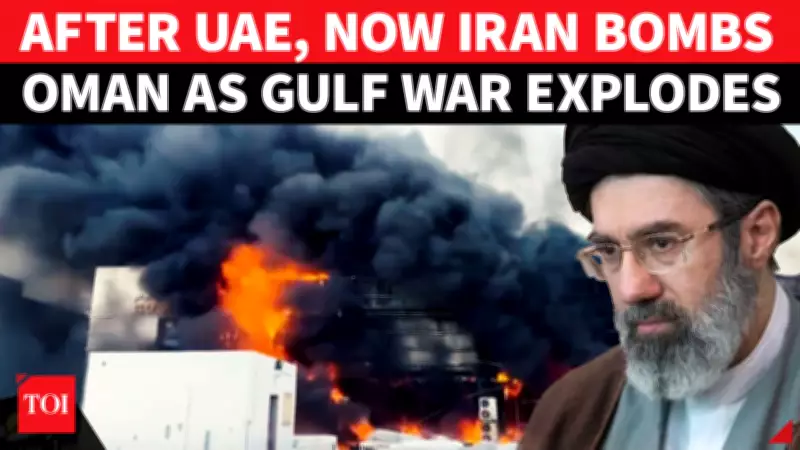
Iran has escalated its military operations in the Gulf region, with the Islamic Revolutionary Guard Corps (IRGC) launching attacks on Oman following strikes against the United Arab Emirates. A residential building in Bukha, Oman, was hit, injuring two expatriates and signaling a dangerous spillover of conflict. This development marks a significant expansion of hostilities that have already seen Iran fire missiles and drones at the UAE.
Attack on Oman and UAE
The strike on Bukha, a coastal town in Oman, resulted in injuries to two foreign nationals. Simultaneously, fires erupted at Fujairah's oil facility in the UAE, and multiple cargo ships were reported ablaze near key shipping lanes in the region. These attacks underscore the widening scope of Iran's military campaign, which now threatens critical maritime routes.
US Response and Strait of Hormuz
In response, the United States announced that it has reopened the Strait of Hormuz, a vital chokepoint for global oil shipments, after neutralizing several threats targeting vessels. The US military has taken action to ensure the safety of commercial shipping, but the situation remains volatile.

With attacks spreading across the Gulf and maritime routes at risk, fears of a broader regional conflict are rapidly intensifying. The IRGC has also deployed what some reports describe as 'dolphin bombs' and a 'mosquito fleet' to target US forces in the Strait of Hormuz, while Iran has issued an ultimatum to the Trump administration.
Global Implications
The escalation has sent shockwaves through global markets, with oil prices surging as the threat to supply chains grows. The United Nations has called for de-escalation, but Iran's actions suggest a willingness to expand the conflict. The situation remains fluid, with further attacks possible.