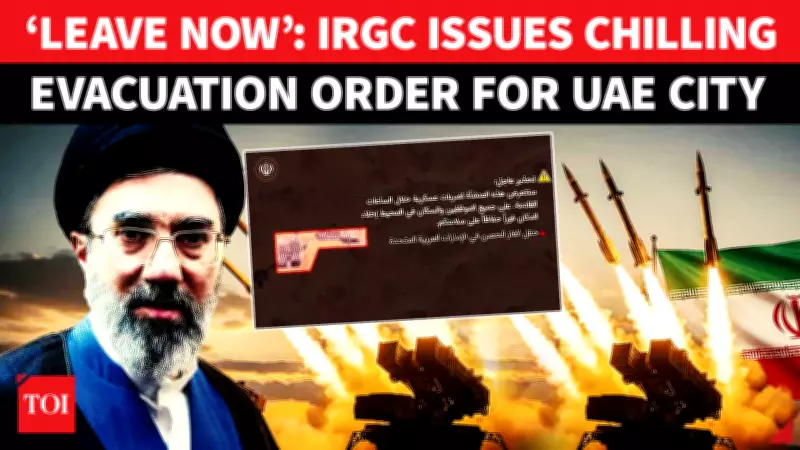
Iran's Revolutionary Guard Corps Issues Urgent Evacuation Warning for UAE's Ras Al Khaimah
In a dramatic escalation of regional tensions, Iran's Islamic Revolutionary Guard Corps (IRGC) has issued an urgent evacuation warning for the United Arab Emirates city of Ras Al Khaimah. The military alert, delivered on March 21, 2026, signals a possible imminent strike against the coastal city, raising fears of direct military confrontation in the strategically vital Persian Gulf region.
Imminent Threat and Evacuation Directives
The IRGC claims that Ras Al Khaimah was used as a launch point for attacks on Iranian territory, justifying their threat of military retaliation. In an unprecedented move, the Iranian military has released specific evacuation routes and safety instructions for residents of the UAE city, suggesting preparations for immediate action are underway.
This emergency alert represents one of the most direct threats Iran has issued against UAE territory in recent years, marking a significant escalation in the ongoing geopolitical tensions that have simmered across the Gulf region. The timing and specificity of the warning have caught international observers by surprise, with many analyzing the potential triggers for such a bold military posture.

Broader Escalation Strategy and Regional Implications
The threat against Ras Al Khaimah is part of a comprehensive escalation strategy being pursued by Iranian military leadership. According to intelligence assessments, Iran has also issued warnings about potential strikes on major UAE commercial ports and critical regional energy infrastructure hubs.
This multi-pronged approach suggests Iran is prepared to target both population centers and economic assets, potentially causing widespread disruption to global trade routes that pass through the strategically vital Strait of Hormuz. Approximately one-fifth of the world's oil shipments navigate through these waters daily, making any military action particularly consequential for global energy markets.
Rising Tensions and Global Concerns
As diplomatic channels appear strained, tensions are rising rapidly across the Gulf region. Military analysts note increased naval movements and air patrols by multiple regional powers, with the United States Fifth Fleet maintaining a heightened state of readiness in nearby waters.
The specific targeting of Ras Al Khaimah—a city located in the northernmost emirate of the UAE—suggests Iran may be testing response protocols and alliance commitments in the region. The city's proximity to the Strait of Hormuz and its developing port infrastructure make it both strategically and economically significant.
International concerns are mounting about the potential for a wider regional conflict that could draw in multiple state actors and non-state proxies. The evacuation warning has triggered emergency meetings at the United Nations Security Council, with diplomats working to de-escalate the situation before military action becomes inevitable.
Economic and Security Fallout
Global energy markets have reacted nervously to the developments, with oil prices experiencing volatility as traders assess the potential disruption to Middle Eastern supplies. Insurance premiums for shipping through the Gulf have reportedly increased substantially following Iran's warnings.
The UAE government has not yet issued an official response to the Iranian evacuation alert, but security forces in Ras Al Khaimah are understood to be implementing enhanced protective measures. Regional allies, including Saudi Arabia and other Gulf Cooperation Council members, are monitoring the situation closely, with some reportedly placing their own military forces on heightened alert status.
This latest development comes amid a series of escalating incidents across the Middle East, including previous Iranian warnings about striking NATO territory and retaliatory actions against what Tehran describes as "hostile activities" by regional adversaries. The specificity and urgency of the Ras Al Khaimah warning, however, represents a new threshold in Iran's willingness to issue direct military threats against neighboring states.